A vexillologist’s delight. We tell the stories of 5 flags to be found within our collections:
British Commonwealth Games flag (ref. CG/2/9/3/10)
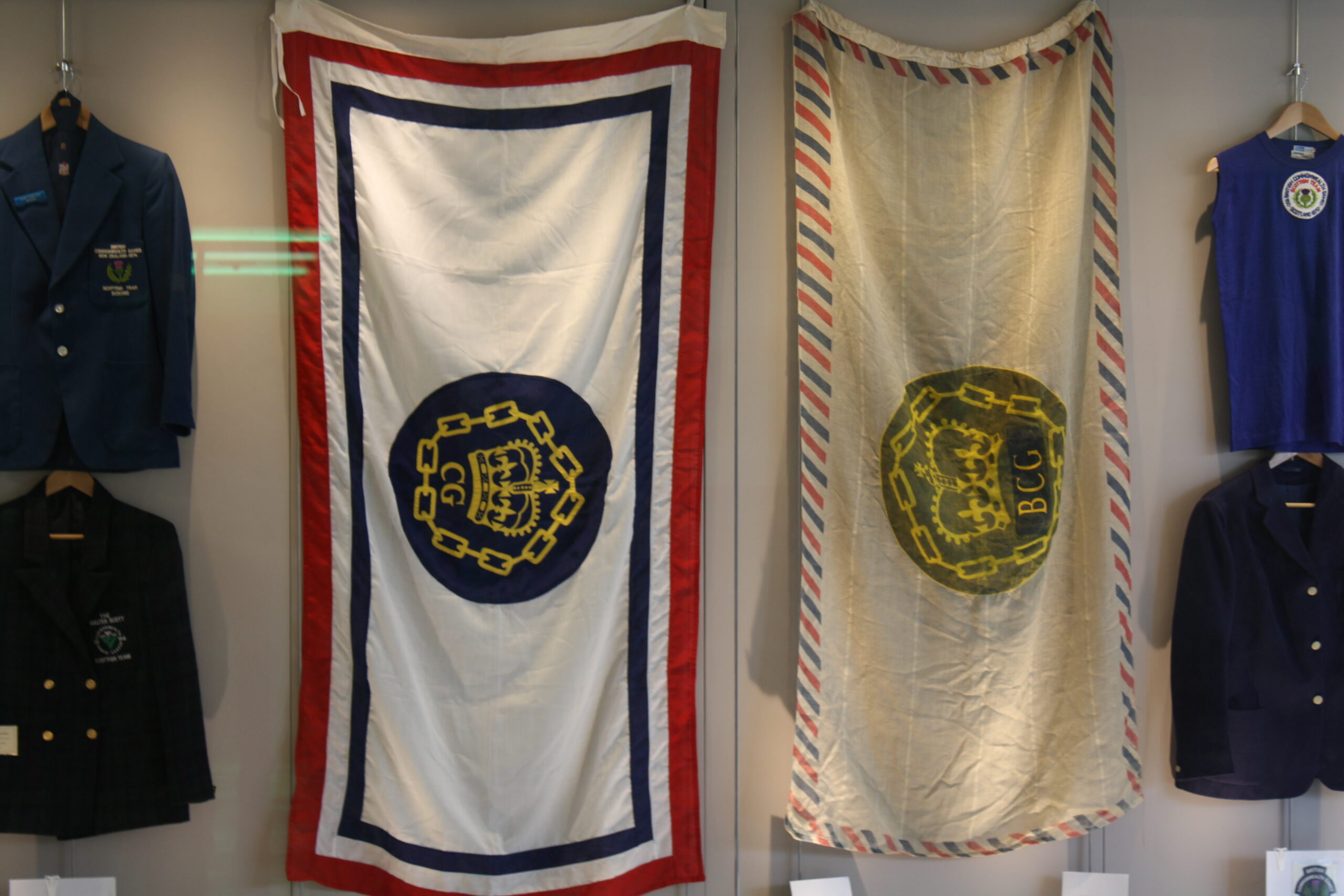
In 2012 the office at Commonwealth Games Scotland received a curious package. Inside was a piece of Games history that had been missing for more than four decades, an official flag of the British Commonwealth Games. The faded flag featured the linked chain and royal crown insignia of the Games at its centre and red, white and blue trim around the edges. This particular flag had first been used at the 1958 Cardiff Games, then called the British Empire and Commonwealth Games. In 1966 the Games changed name again to the British Commonwealth Games and the flag was clearly altered to fit the new title.
The package also included a typed note from the sender which revealed precisely what happened to the flag, and where it had been all these years:
“This flag flew on the North West corner of the Meadowbank Stadium at the Commonwealth Games, held in Edinburgh in 1970. At the time I was a couple of months short of my seventeenth birthday, and I had a summer job at the venue. The flag was “liberated” by me with assistance provided by a tall boy scout. He held me whilst I reached to cut the rope to release the flag. We then both ran, chased by a security guard who luckily was nowhere near as fast as Ian Stewart or Ian McCafferty who we had just seen taking Gold and Silver in the 5000 metres! The flag has been returned to Commonwealth Games Scotland having been “borrowed” for just under 42 years!”
Coronation flag for King Edward VIII (ref. RA/19/1)
Ron Aitchison, a former resident of the Aberlour orphanage, collected a wide range of material relating to its history. His collection adds another layer to the story of the orphanage recorded in the archives of Aberlour Children’s Charity. Ron’s collection includes a curious commemorative flag for a royal coronation that never was. Rescued from a bonfire of rubbish by a former member of staff and given to Ron by their family the flag was produced to celebrate the coronation of King Edward VIII which was scheduled for May 1937. Events conspired to cause the king in waiting to abdicate on 11 December 1936 before his coronation.
The circumstances around the survival of this curious piece of royal memorabilia are recorded with a note enclosed with the flag:
“The flag is donated by Mrs Helen Foulstone, one time of Aberlour. Helen’s father rescued the flag from a huge bonfire at the Orphanage grounds to celebrate the Coronation. When he got up the pole and retrieved the flag the assembled crowd let off a huge cheer.”
Design for the new flag of Malawi (ref. MK/1/3/1/68)
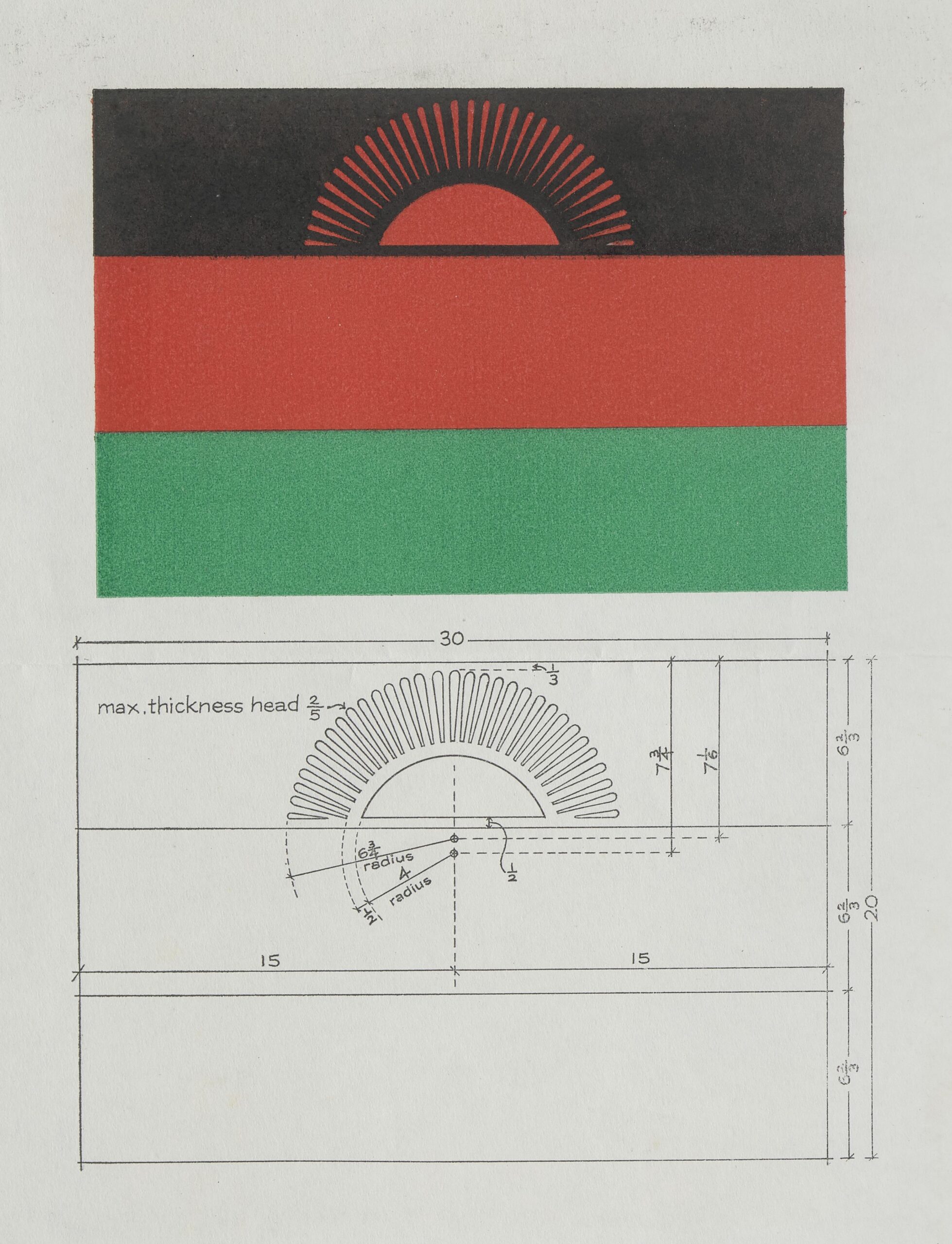
We now come to a flag-in-waiting, the nearly-about-to-be flag of Malawi as it gained independence from Britain and ceased to be Nyasaland. This diagram comes from our Peter Mackay Archive – an archive which details Mackay’s life in Southern Africa from 1948 until his death in 2013, and which centres around a period of incredible political change. Mackay’s involvement in these political struggles varies from behind-the-scenes publisher to guerilla arms trafficker and his archive charts high hopes and dashed dreams throughout the 1960s, 70s and 80s in Malawi, Zimbabwe, Zambia and Botswana. It is perhaps easier to see Mackay’s disenchantment with politics in the archive – he notes in his diaries that the new regimes he supports and to which he correspondingly gives his all, one by one fall short of their promise. This diagram, in contrast, feels like an insight into a rare moment of triumph. The document speaks to the start of a new political era, where promises are still intact and the future is exciting. Finding this item in the Peter Mackay Archive gives you a feel for just how involved he was in the process of Malawi’s independence and considering all the struggles and danger that had gone before and would come after, it’s nice to be able to imagine Mackay and his colleagues sat around a table taking a rare moment away from the political strife to decide just how many rays of sunshine there were going to be on their new flag.
Painted pebble flag (ref. PAN/1/1/1/5/41)
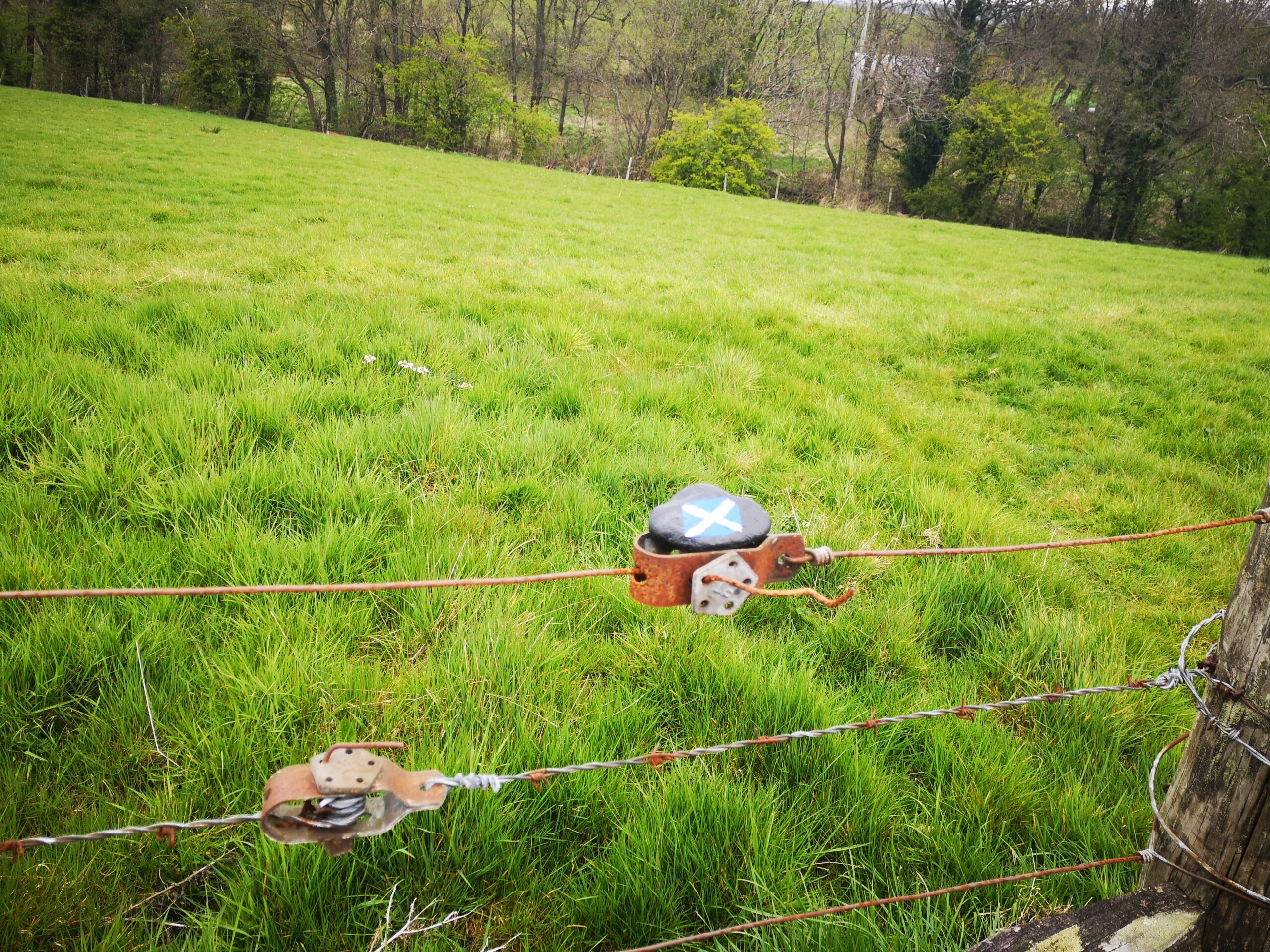
The Covid-19 Pandemic can be characterised by a series of fairly unique social phenomena – the Zoom quiz, clapping or banging drums and pans on a Thursday night, community pom-pom trees. Chief among them, perhaps second only to rainbows in windows, was the painted pebble. Variously an activity to do with your children who couldn’t go down to the local (closed) play park as usual, a mindful activity for a frazzled grown-up or a way for a whole community to come together from afar, leaving stone by stone in a public place to demonstrate our togetherness despite our enforced physical distance, painted pebbles became a common sight in the early 2020s and they are well evidenced in the Covid-19 Pandemic Archive here at the University of Stirling. The images in this archive were donated from across Scotland primarily by staff and students at the University of Stirling who were keen to help us capture what their local communities looked like during the lockdowns and through the waxing and waning of restrictions. These images show us what community looked like when we couldn’t physically band together and often feature creative and artistic items placed in solitary, rural, out-of-the-way spaces – a gentle hello from a stranger who wanted to remind you that there are still other people sharing your world. The pebbles are usually bright, maybe even glittery. They depict people, animals, flowers and sometimes the Saltire flag. Why the flag? A marker of politics, a love of the colour blue, or an indicator of home?
Keep Music Live banner (ref. MU/7/4)
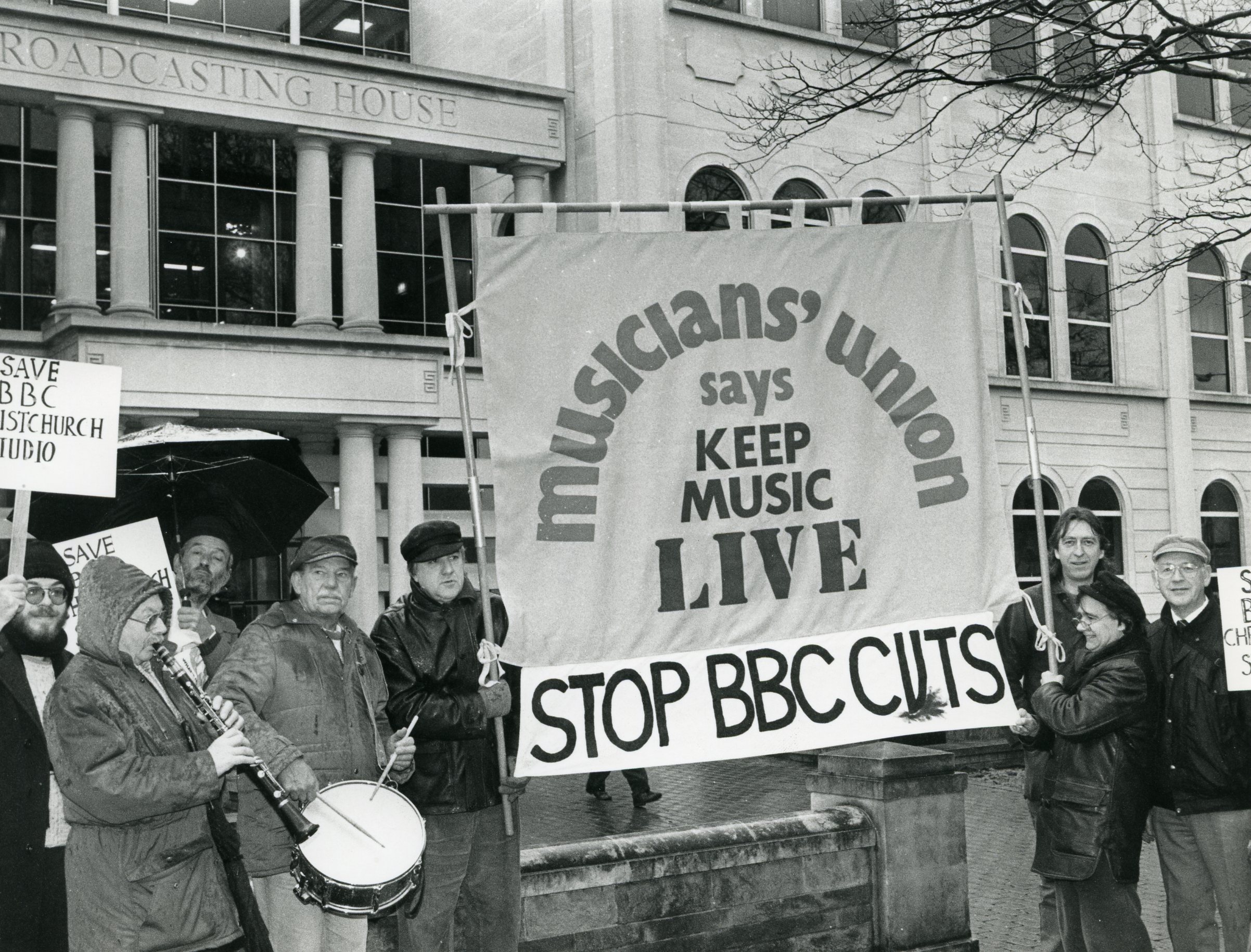
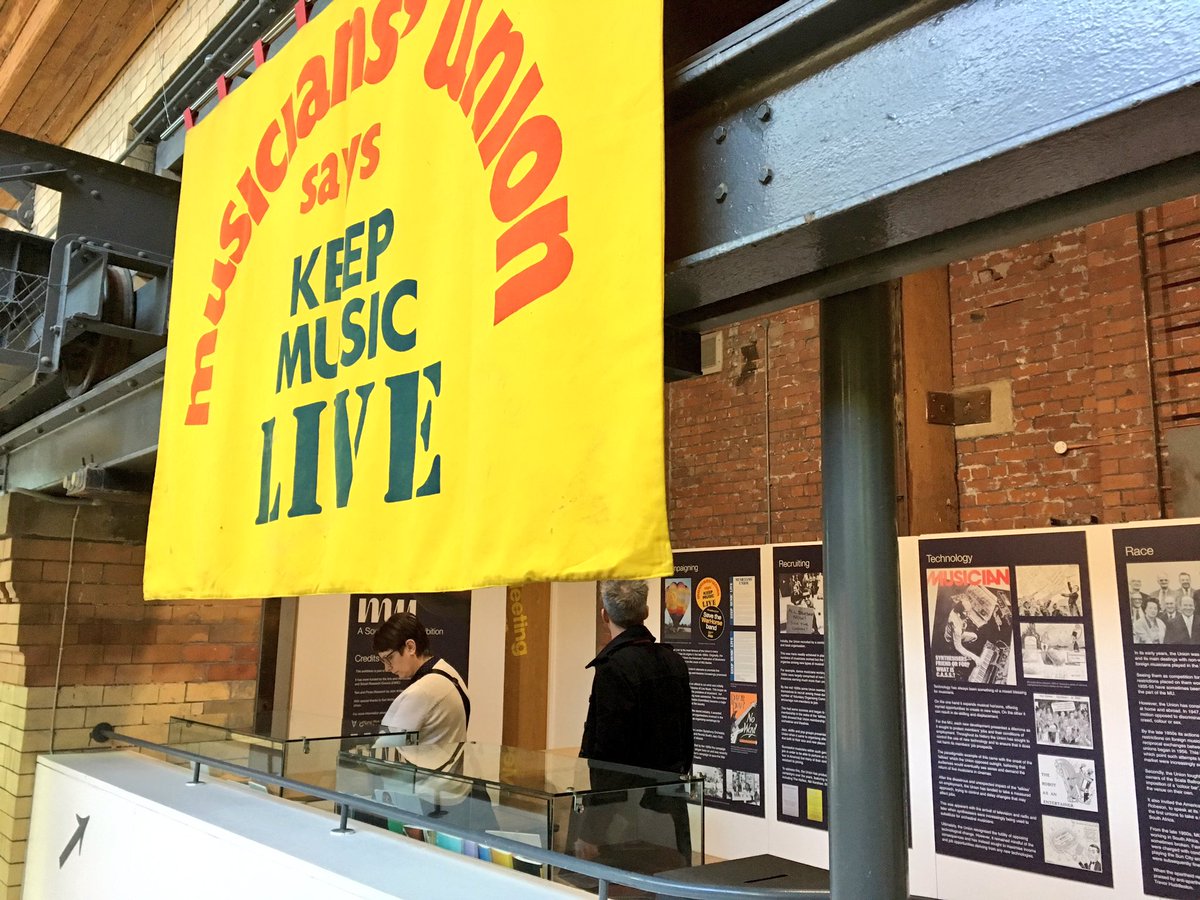
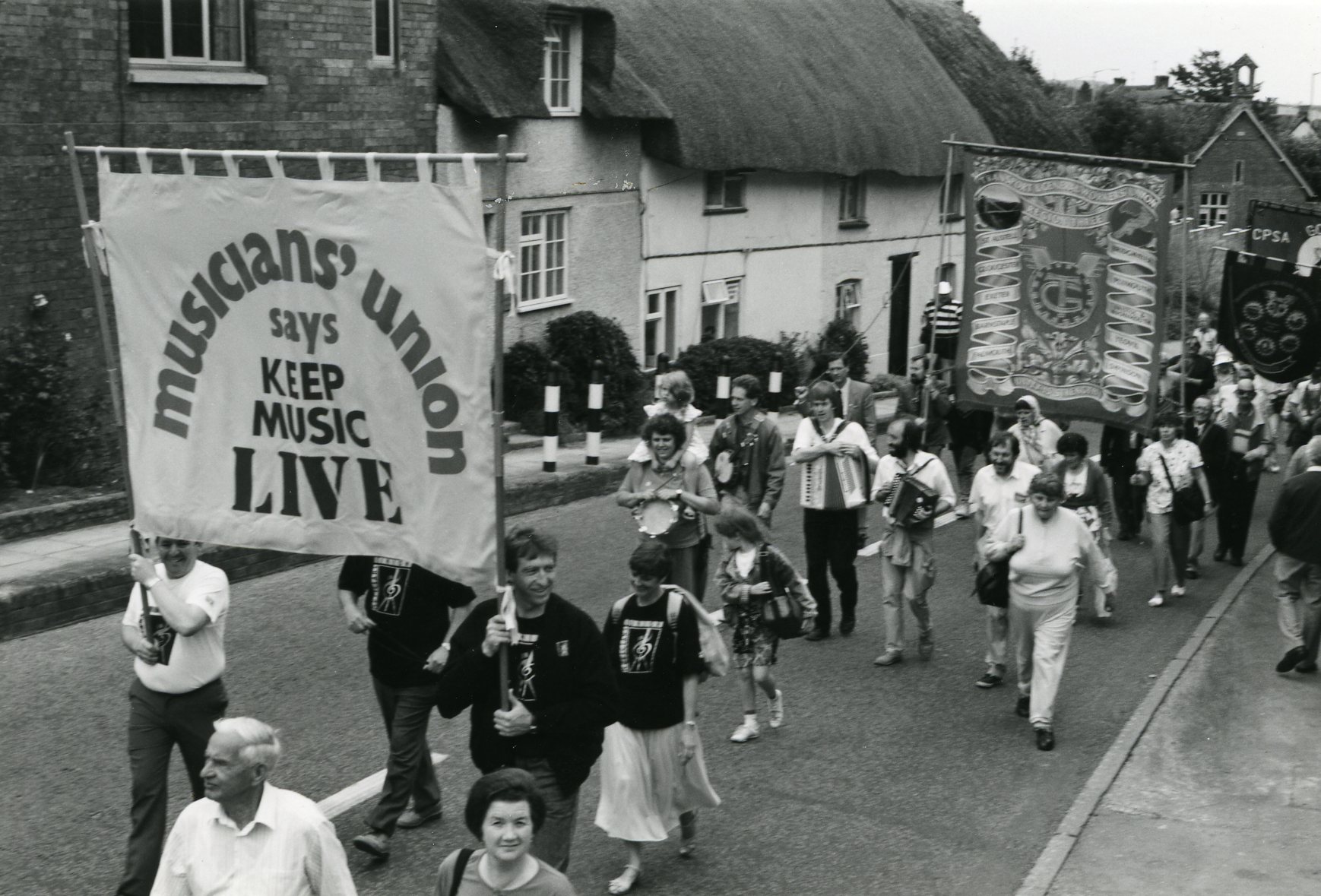
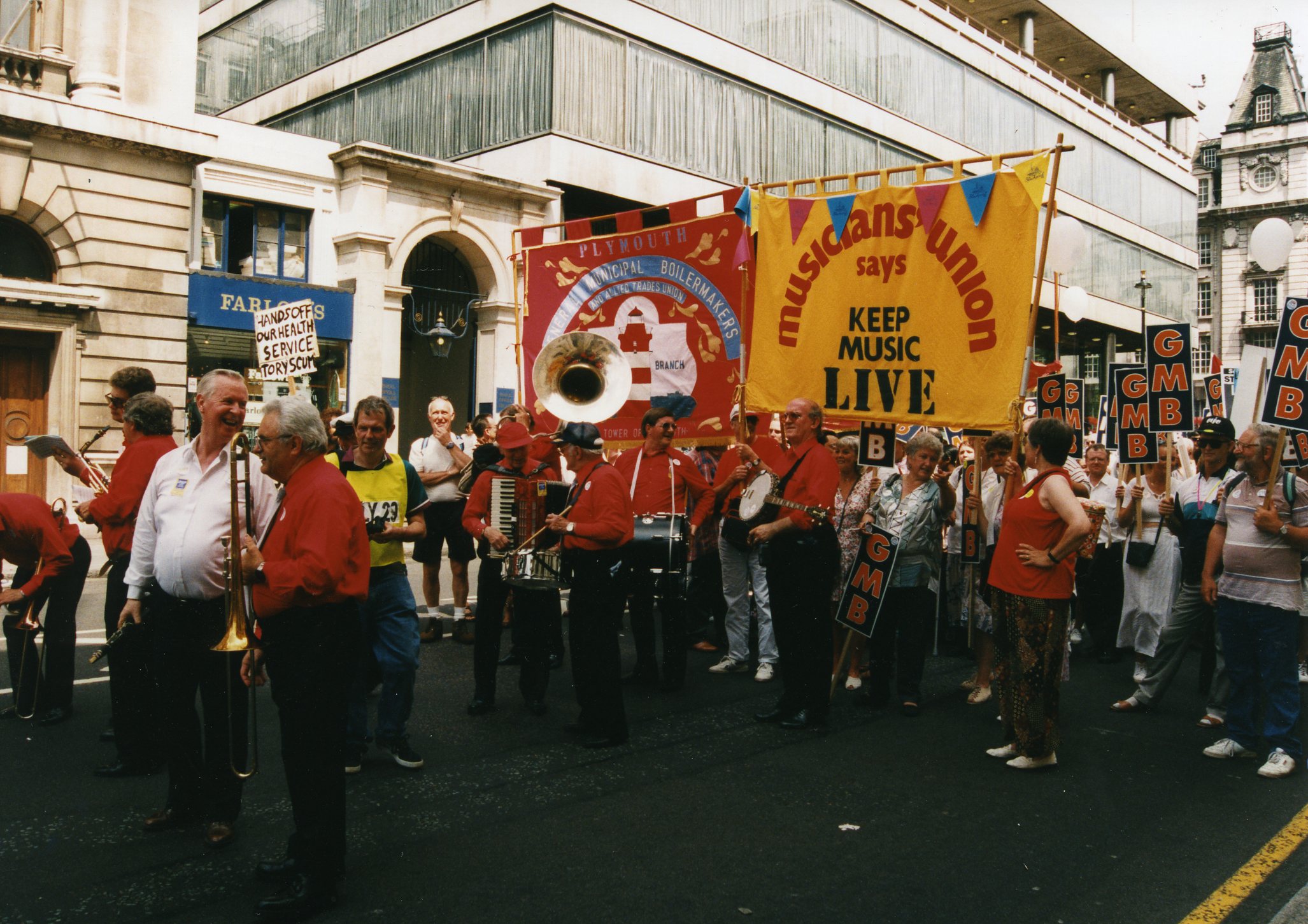
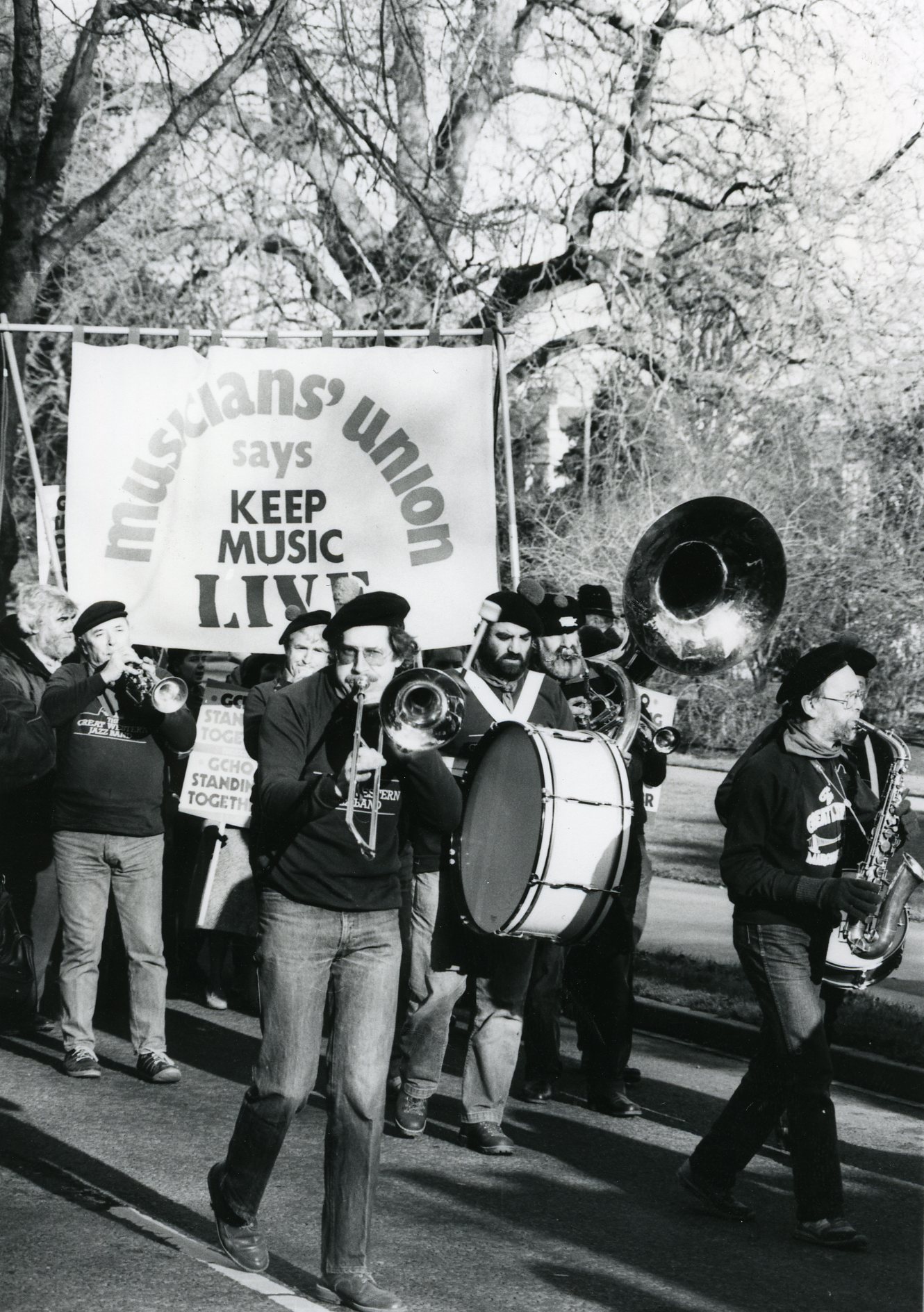
OK, we’re stretching the definition of flag but the Musicians’ Union Archive contains a colourful selection of banners which were carried on marches and displayed at campaign events. The most striking of these is a large yellow Keep Music Live banner measuring 200 x 145 cm. With its striking badges, bumper stickers and banners the Keep Music Live campaign has been a core part of the union’s activities for over 50 years. A slogan which encapsulates the union’s support for the live music sector, it initially appeared on the cover of its members diary for 1959. By the mid 1960s the campaign was fully developed, an article in the January 1966 issue of The Musician providing full details of the launch of the Keep Music Live campaign – a digitised copy is available to view on our online catalogue. The distinctive campaign branding of red and blue lettering on a yellow background appears throughout the archive in articles, on leaflets and in photographs. The large campaign banner shows the signs of a long life of campaigning with the dirt, staining (and footprints) evidence of its presence at many trade union marches and events.