With the academic year now in full swing, the Art Collection has had the pleasure of welcoming Charlene Scott as this year’s Artist in Residence. Based in East Lothian, Charlene works primarily with botanical pigments to create works on paper and cloth that are notable for their economy in means and method.
Charlene joins the Art Collection during its themed year of topography, in which exhibitions will explore how artists have considered the study of the forms and features of land surfaces. Charlene will work with researchers to examine the ecology of the University campus to create works inspired by the campus and the research that is undertaken at Stirling.
Through her material-driven engagement with nature and the distillation of form, Charlene’s works are a contemporary observation of environment that draws on the traditions and techniques of natural dyers and bookbinders.
In this blog, we hear a bit from Charlene about her first few weeks here at Stirling.
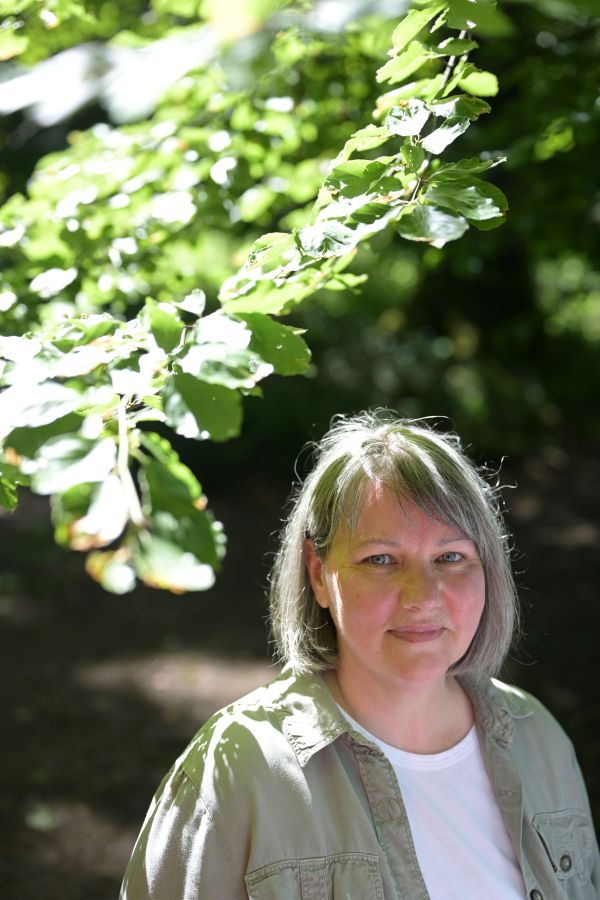
My first month as the newly appointed artist in residence has been full of introductions and wonderful conversations. The act of settling in has stretched from gazing on prehistoric stones to recently constructed hedgehog highways, the vibration of the cyclical thrum of campus corridors to the stillness found by walking and sitting by the loch. It appears there are many worlds within worlds here.
September
It began in the Pathfoot Orchard a conversation with Jacky and a small broken branch from the apple tree only thirteen inches long
then a pear tree branch, a twig really, laden with leaves
walnut tree leaves, only three, picked from the ground but oh what a swirl of caramel colour it offered with a gentle weeklong bath
Woad in the Oyster catcher courtyard refusing blue turning turquoise green
pulled out with the sharpness of salt
then pewter grey and soft pink
the pungent aroma overwhelming the bothy
a gift from Emma and Sarah
Garden and Grounds direct me to an embankment of heavy headed dyers chamomile
A deep sigh at the familiar sight
yarrow and its umbel of flowers carrying memories of medicinal lore; though not for me
I’m seduced by its pale-yellow dye but it almost always makes my head hurt
I swear they shout “pick me” and I return for more
Some Helenium over by Cottrell
a surprise dye of a vibrant yellow green, the colour of bile
Rudebeckia not one colour but three; petals, centres, petals and centres
three more saddened with iron
another three lightened with a pinch of acid, their essence vibrating harmoniously
Over by the golf course we collect Beech husks
A squirrel’s love of beechmast leaving them cracked open and discarded
Their spiny shells soaked for several weeks to soften
cooking up a sweet smell belying the soupy astringent dye
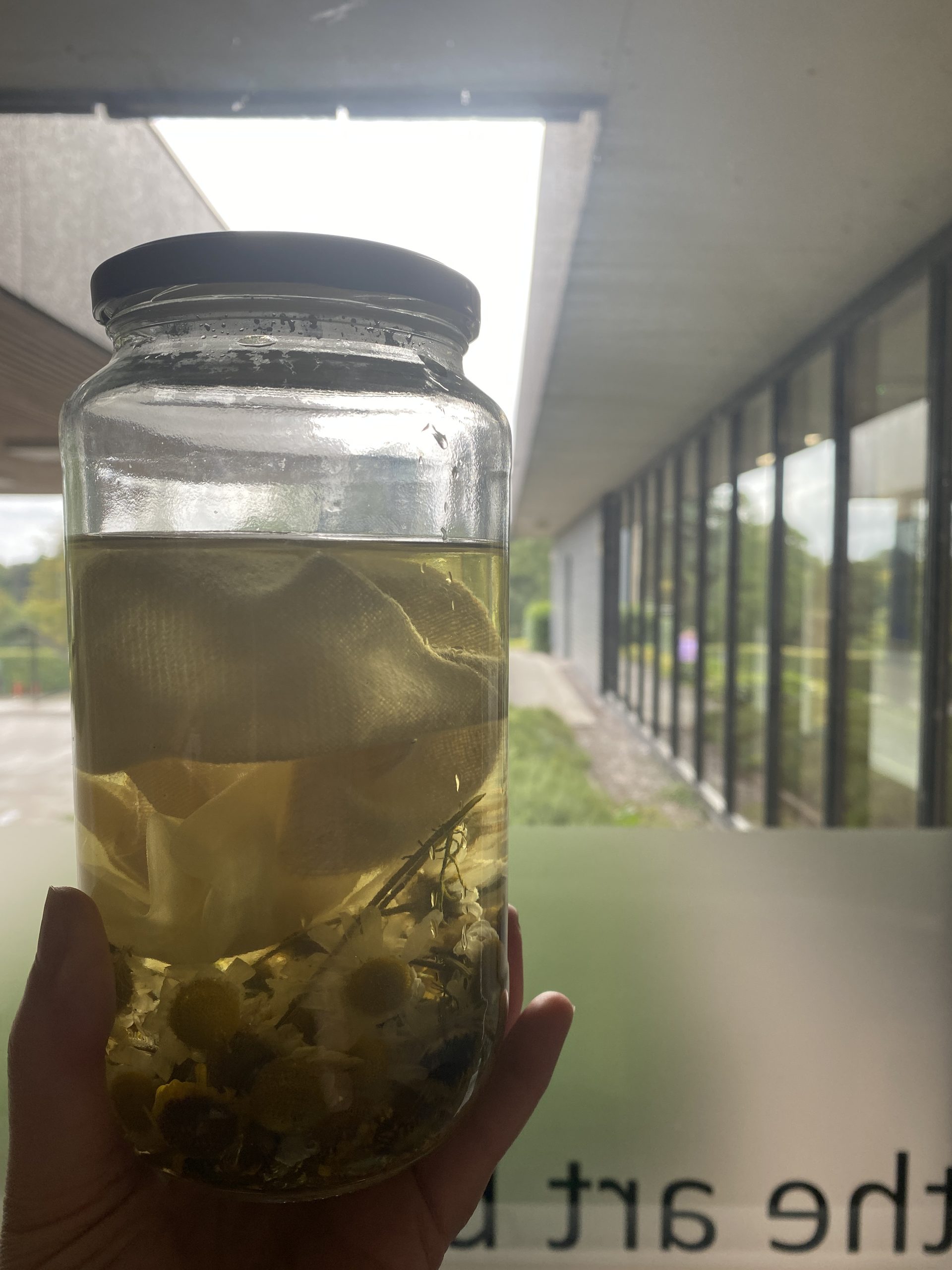
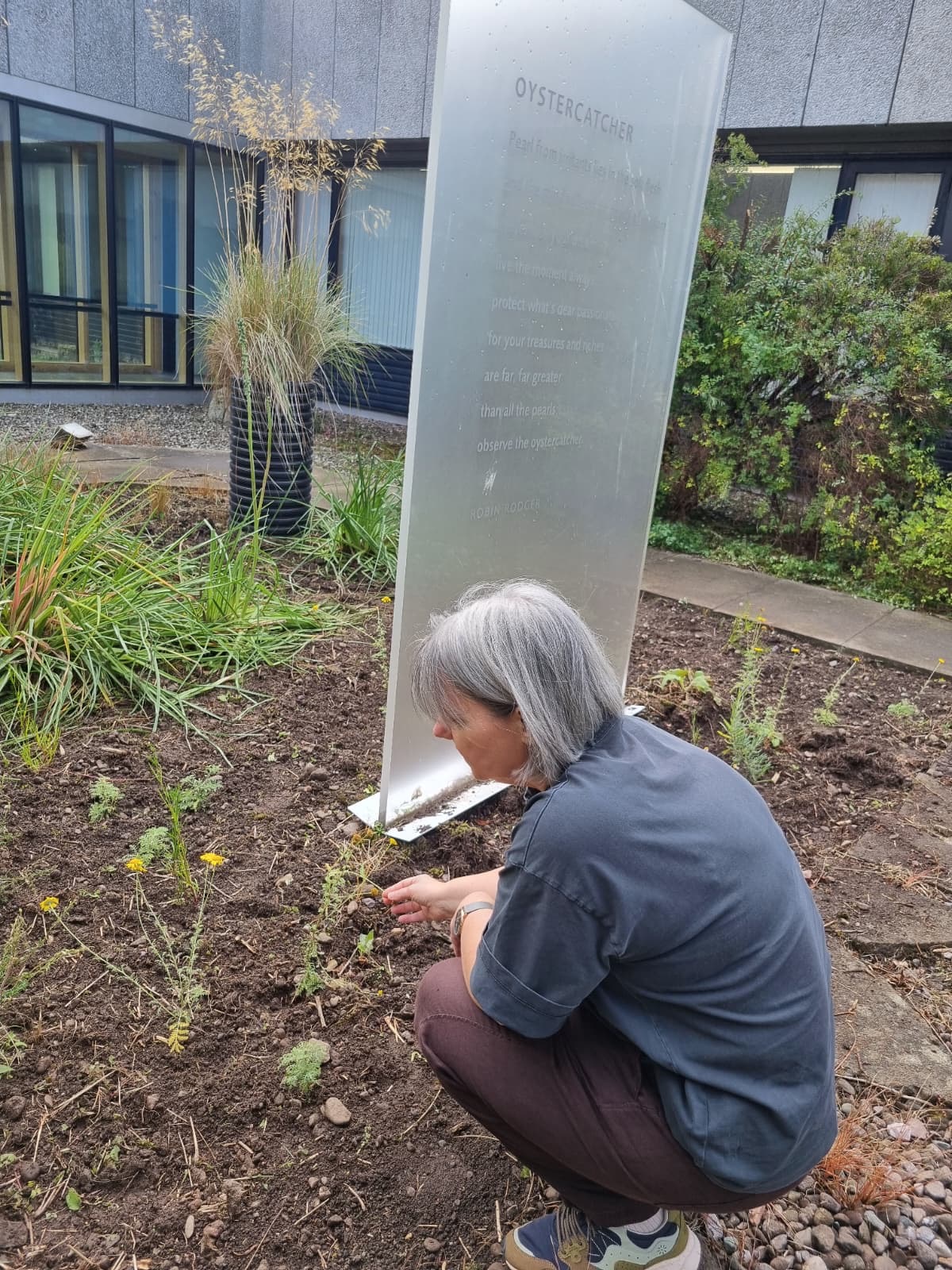
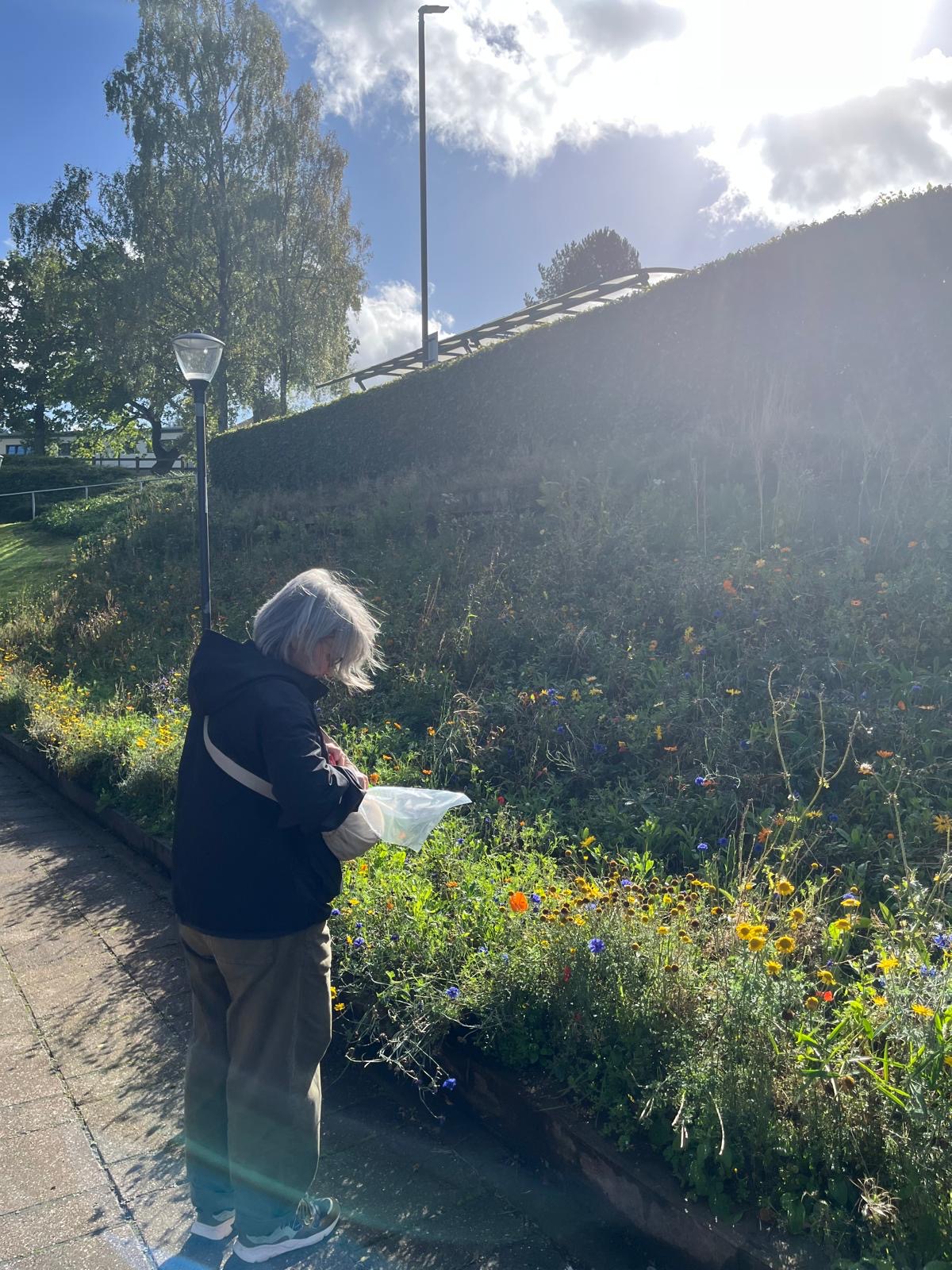
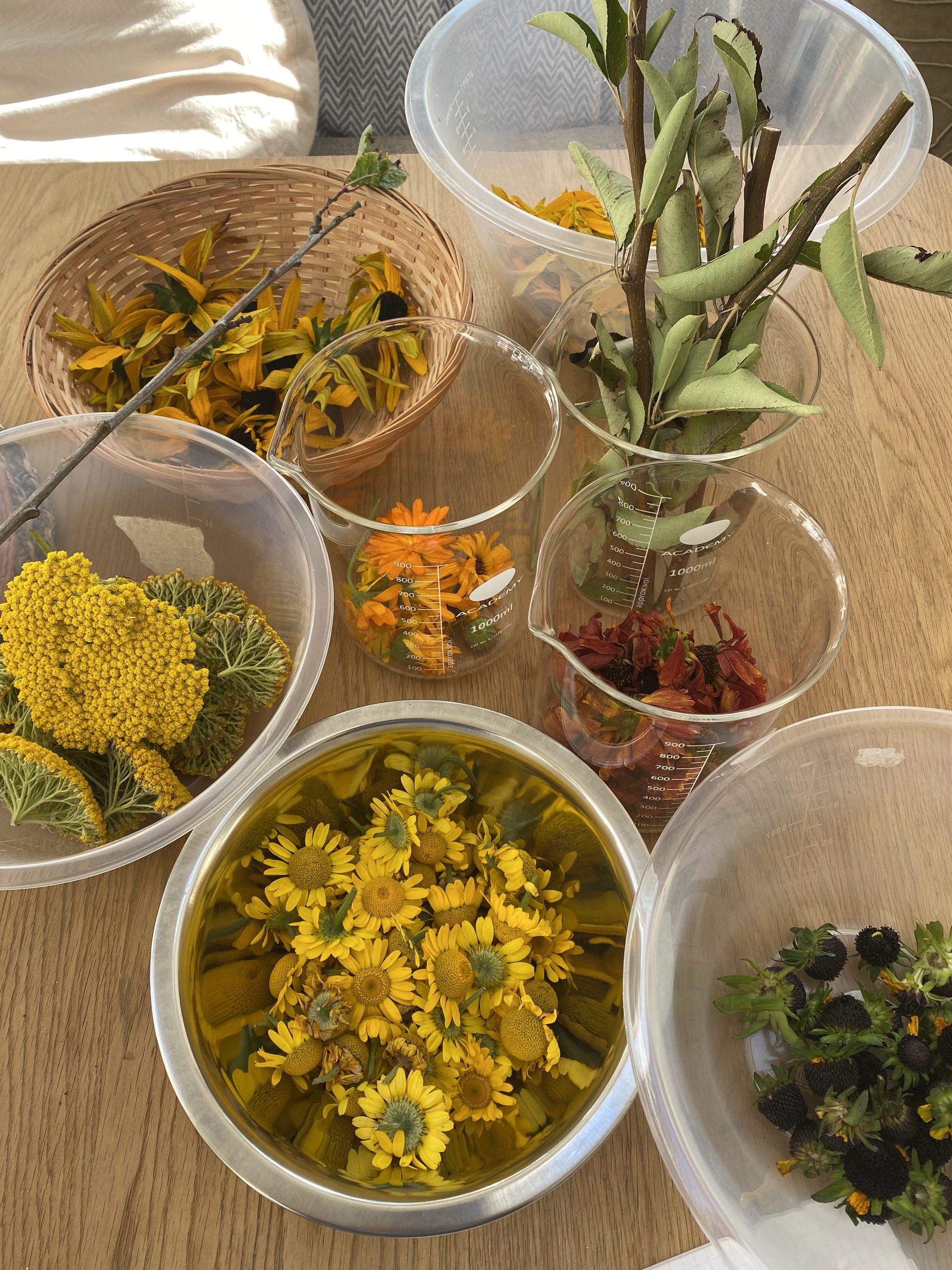
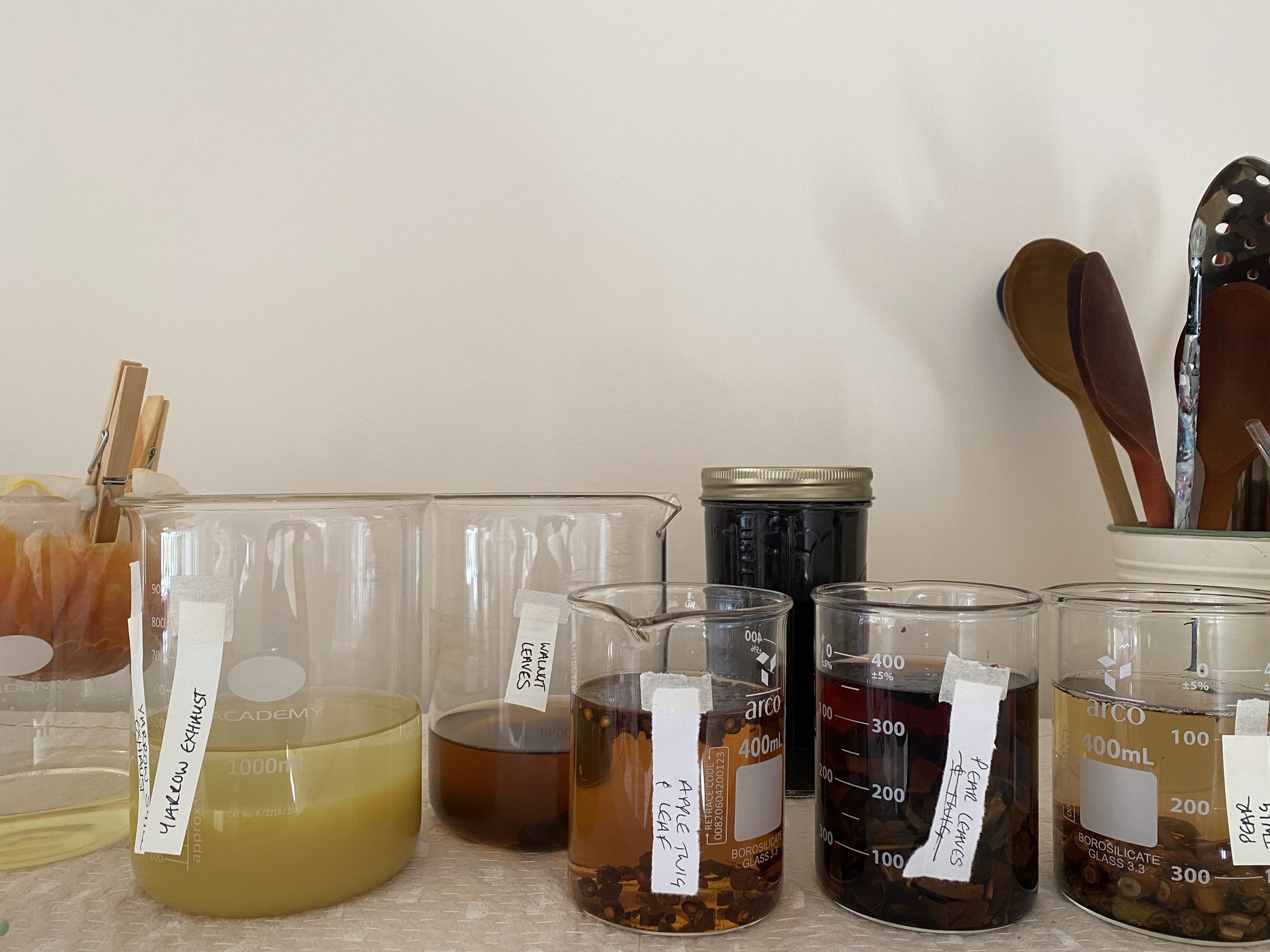
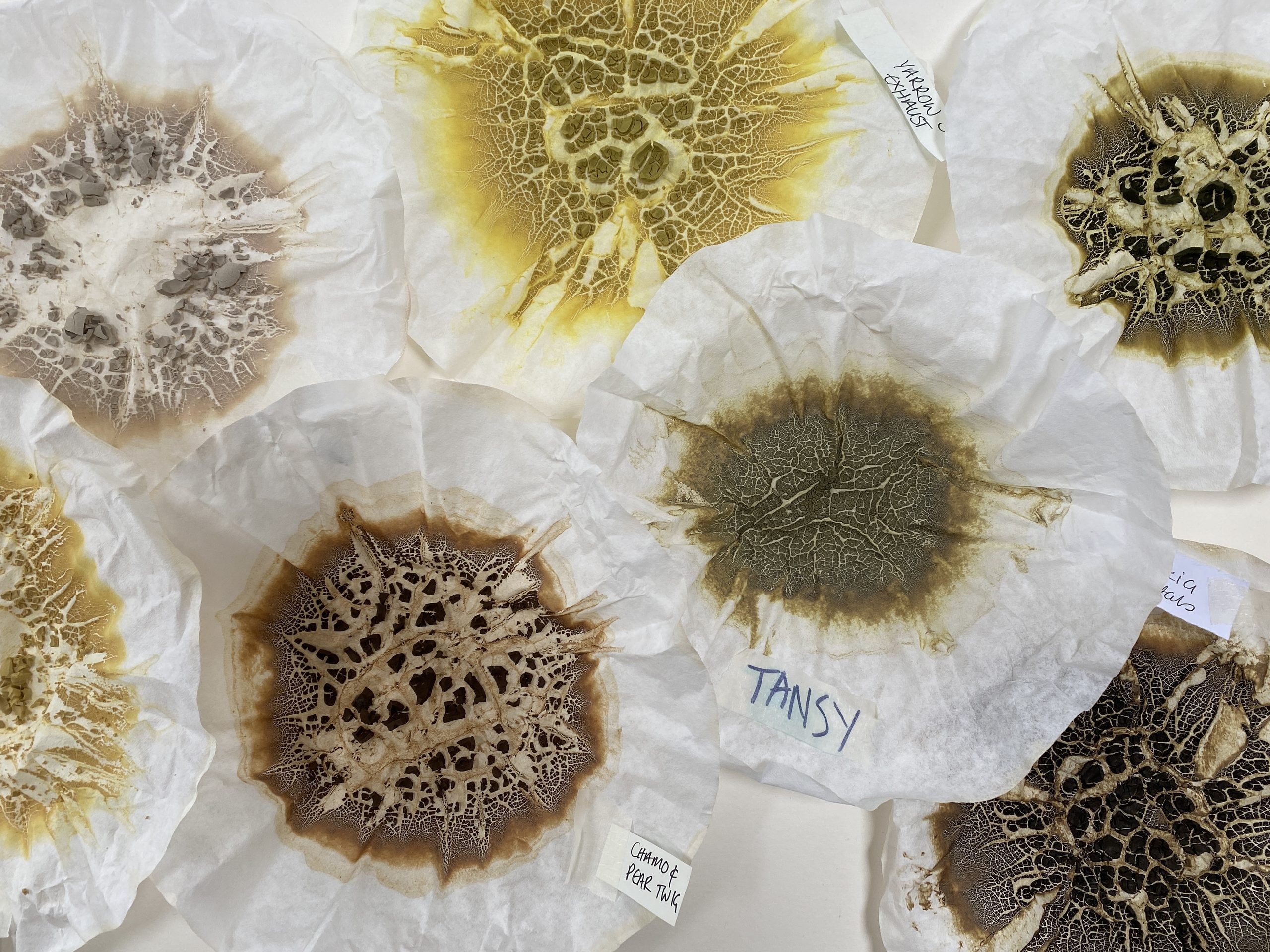
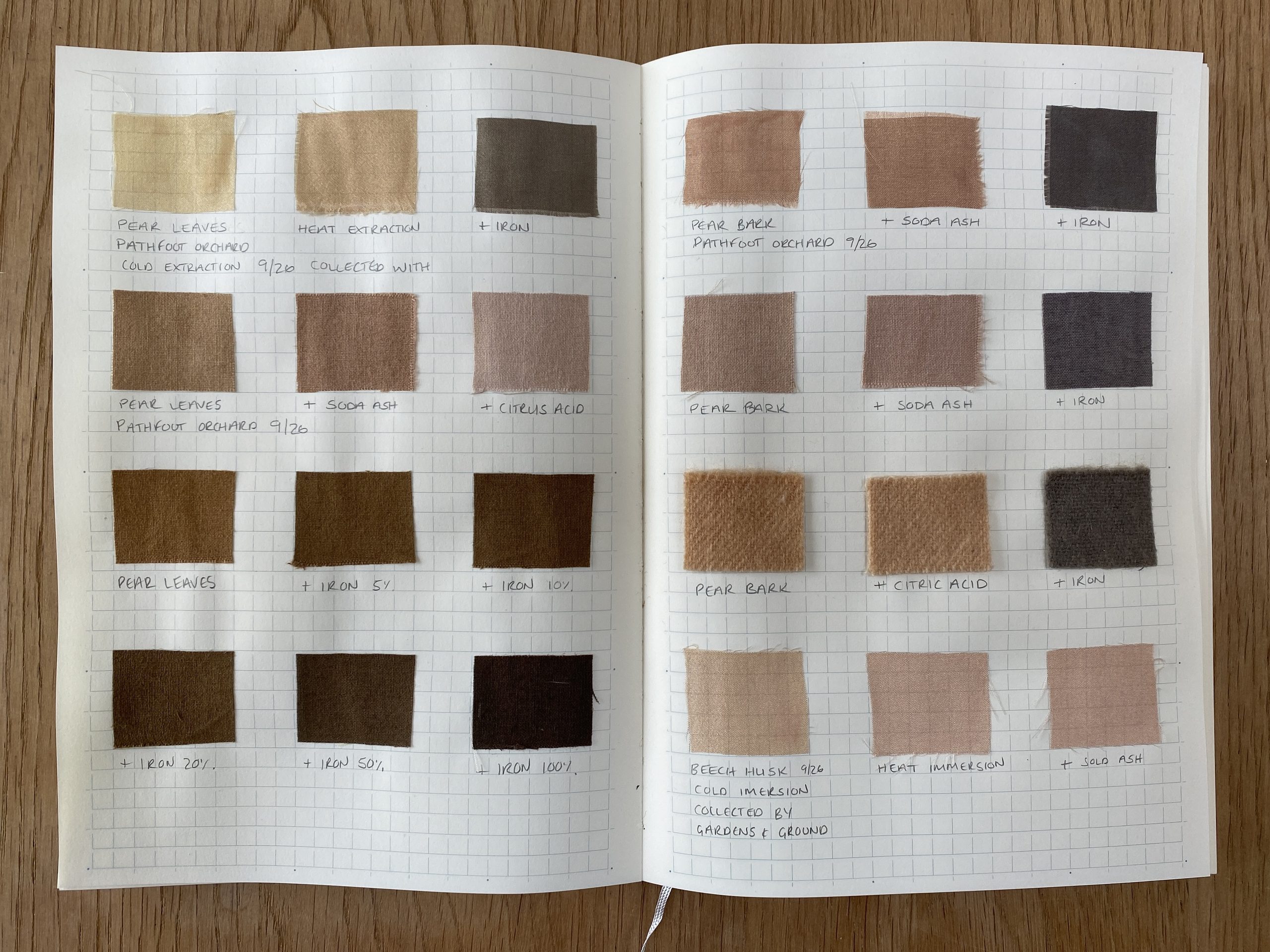
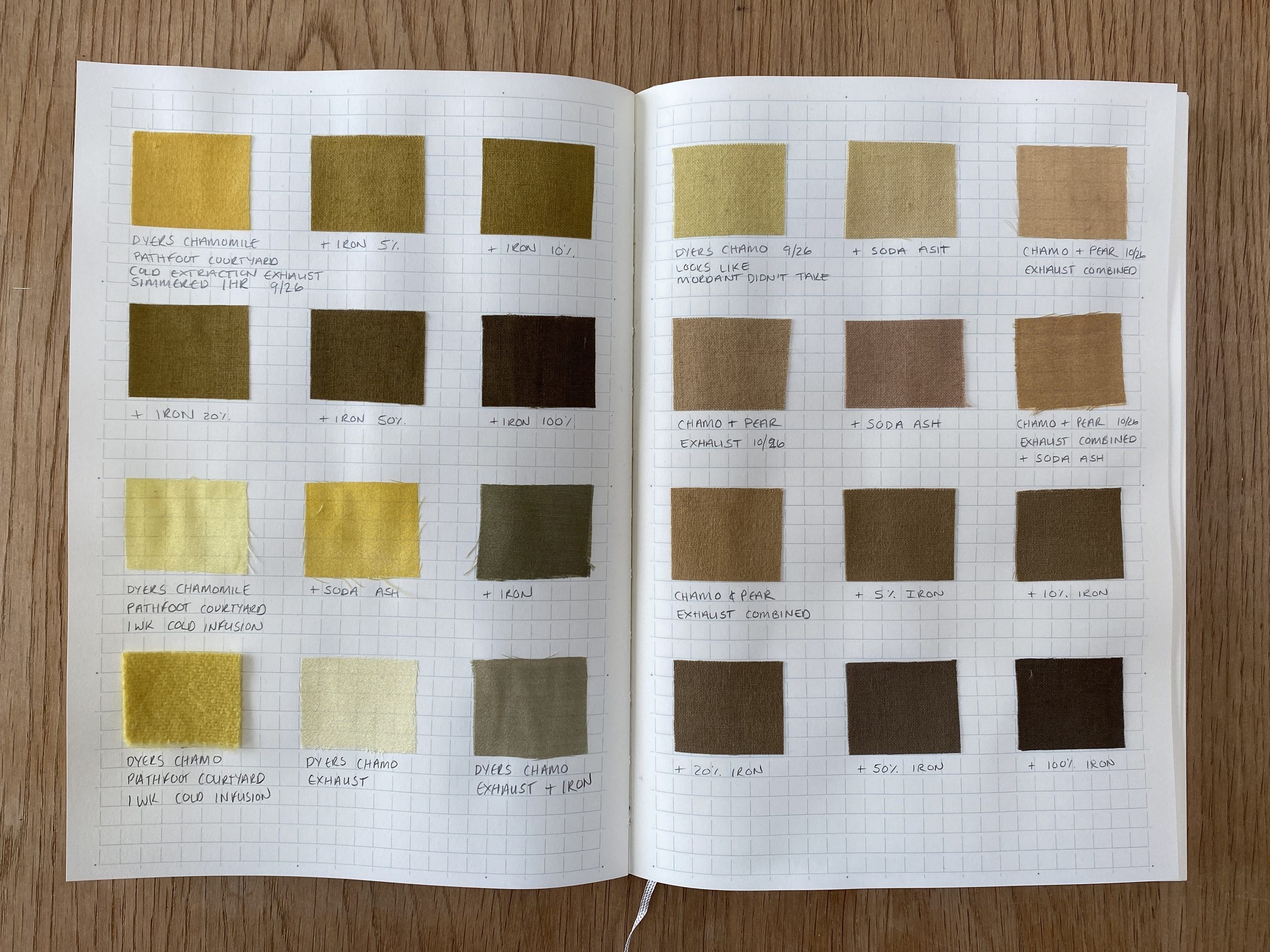
image 1
Setting up a cold colour extraction with a jar of chamomile flowers gathered from the Oyster catcher courtyard. With time, the dye molecules from the flowers will attach themselves to the pieces of wool and silk that are placed within the jar alongside the flowers.
Image 2
Introducing myself to the newly planted seedlings in the Oyster catcher courtyard at the Pathfoot building.
Image 3
The wildflower embankment on campus where I gathered calendula, dyers chamomile, and yarrow.
Image 4
Back in my studio weighing and sorting some of the gathered plants from campus. Several historical methods of extracting colour are used, some to directly dye cloth and others to make what is known as a lake pigment.
Image 5
Lake pigments in my studio during the drying stage. Lake pigments create a coloured powder which can then be ground and stored to later become paints and crayons. These will be become part of the artworks created during my residency.
Image 6 & 7
Some of the colours collected during September on campus. This sample book will be a direct way to record time and place through colour found on campus during my residency year.
