Television Producer and Sports Editor
Professor Richard Haynes
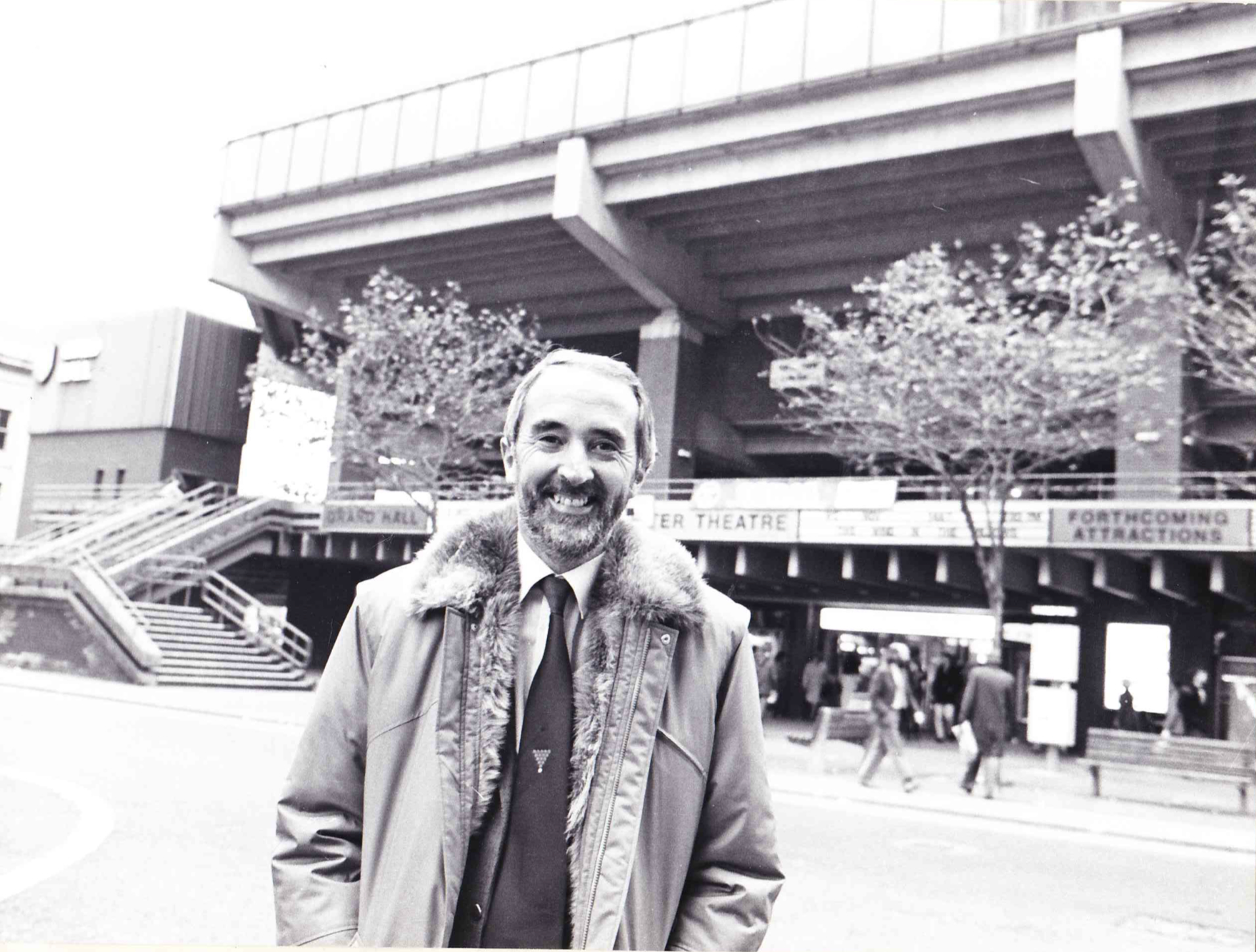
Nick Hunter, was a television sport and outside broadcast producer and editor who worked for the BBC over three decades from 1959. Nick’s achievements in sports broadcasting are well known amongst broadcasters of a certain generation, but less well known by sports viewers. This blog post is a tribute to Nick’s career in television sport following his death on 24th March 2026.
I interviewed Nick in 2008 at his home in Reading for a book I was researching on the history of BBC television sport. I had been given Nick’s number by darts commentator Sid Waddell, the eccentric Geordie commentator then working for Sky Sports. Sid was also a pioneer of darts on TV and insisted I talk to Nick. He felt Nick had been one of the most influential producers of sport throughout the 1970s to the 1980s.
My interview with Nick mainly focused on the role of the commentator in broadcast sport. However, we also touched upon aspects of his wider career in television which included sport but also other forms of outside broadcasting and light entertainment. Some of my interview with Nick was used in my book BBC Sport in Black and White (Palgrave, 2016) which covered the early period of television sport up to 1967 when colour was introduced. But much of the interview has remained unused, until now.
In 2018, I received a message from Nick’s son Neil who also went on to work in television as Director of Sky News. Neil mentioned his dad had created a number of scrapbooks which contained letters, news clippings, photographs and assorted papers related to his career at the BBC and asked if they could find a home at the University of Stirling.
Arriving at Nick’s home, a decade after my first visit, it became apparent there were other materials related to his career that needed conserving. I literally filled my car to the brim and brought the collection including tapes, framed images, books, assorted papers and a snooker cue back to the university where they were officially deposited in the University of Stirling Archives. The snooker cue within the collection is a clue to Nick’s career and the many innovations he brought to the coverage of sport on television.
This blog is a tribute to Nick’s life at the BBC and beyond, and the programmes he worked on based on his personal collection and the interview I conducted in 2008. The blog will grow over time as we share different aspects of Nick’s working life in television through his archive. We would like to thank Nick Hunter’s surviving family, Neil and Michael Hunter, for permission to use Nick’s personal collection.
Early Life
Nicholas Jervis Frederick Hunter was born on 2nd June 1938 in Moseley in the West Midlands. His father Frederick Hunter was a civil engineer who was married to Elsie (nee Jones), Nicks mother and they lived in Solihull.
As a boy Nick attended Westminster Abbey Choir Preparatory School between 1947 to 1952 where he completed seven O’Levels. The school still exists and with a history going back to the 16th Century. Enrolment in a preeminent choir school suggests Nick had a singing voice with potential. It would certainly have given him a distinctive schooling. It would also have made him acutely aware of what it takes to perform in public.
Nick subsequently studied at Cranleigh School, Surrey between 1952 and 1957 which would have opened up many sporting opportunities as well as a privileged education. Nick noted that he had always been interested in sport from a very young age and had a trial for Warwickshire County Cricket Club:
I played a certain amount of sport myself. Once flattered myself that I could make it in professional cricket. But not really. Big, long, thin. And I was a bowler. So no chance really. I wasn’t good enough either.
However, his interest in sport did lead to his first job as a School Sports Master at a boy’s preparatory school in Seaford, East Sussex. Still a very young man, only 19, he worked for the school from autumn 1957 to the Christmas break in 1958.
First job in broadcasting (1959-1966)
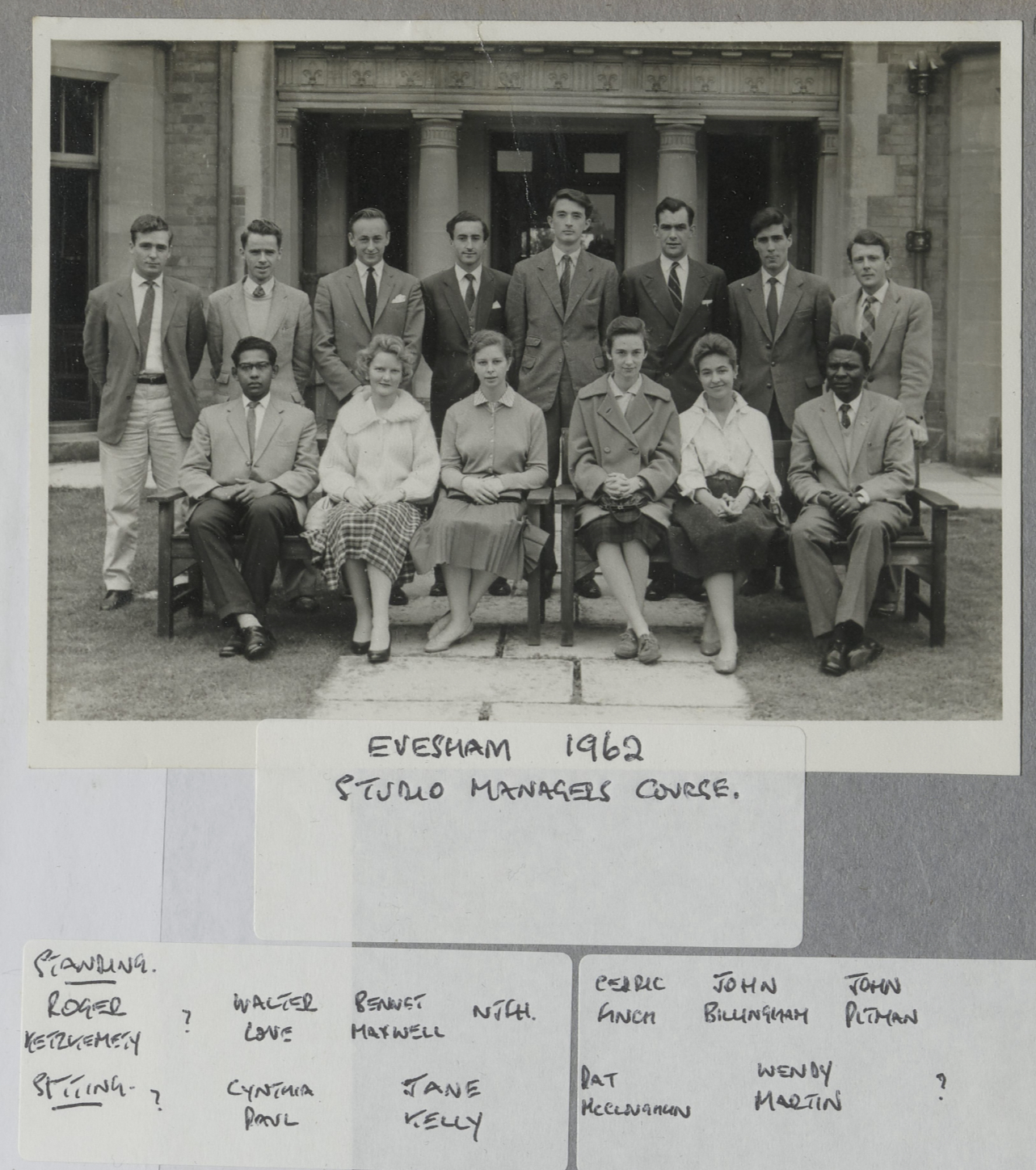
In February 1958, Nick applied for a Trainee Studio Manager post with the BBC. In March 1958 he was invited for a preliminary interview at Broadcasting House in Portland Place, London. A ‘Voice test’, a further interview and medical followed in April and May 1958. A formal offer to join the Trainee scheme came through in October later that year. Nick began his career at the BBC on the 19th January 1959.
On probation as a Trainee Studio Manager in radio at Broadcasting House, Nick worked on programmes such as Sports Report edited by the fierce Scotsman Angus Mackay. Sports Report, which continues to open with its familiar theme tune ‘Out of the Blue’ was labelled “The Weekly Miracle” by sport journalist Patrick Collins. It was a fast-paced high-wire topical sports news programme anchored around the weekend’s classified football results.
The results service was supplemented by snappy eye-witness reports from around the country alongside journalistic analysis. At the helm was broadcaster Eamonn Andrews, who was presenting the programme when Nick joined the team. Nick recalled working for a couple of years on Sports Report as an Assistant Studio Manager for Central Programme Operations (known as C.P. Ops), with short spells located in Glasgow and Birmingham. Working on the programme inspired Nick to consider a career in sports radio, but Mackay soon scuppered those aspirations. As Nick recalls:
I asked him at one stage whether I could make a career in sport. And he said to me ‘Have you been a journalist?’ And I said ‘No’. And he said, ‘Forget it’.
It prompted Nick to consider a move into television, at the time considered second fiddle to radio broadcasting.
Nick got his first attachment to television Outside Broadcasts in June 1962 and assisted the coverage from Wimbledon. Still under C.P. Ops, Nick became a Stage Manager for televised sport, an incongruous title for outside broadcasting which mainly involved “walking around in headphones” to be the “producers’ eyes and ears on the ground or in the commentary box.”
Following his first attachment to TV, Nick continued to work on OBs on his days off on expenses only. He was told by his bosses in radio that he was being ‘used’ but persevered until he was given his second attachment to televise cricket in 1963. Nick recalled many trainees thought working on cricket to be dull and monotonous, which opened up an opportunity to move full time into cricket broadcasting.
They thought it was a boring game, and they didn’t want to know about it. So I, to my astonishment and delight, got put on the cricket. And to their astonishment and delight they had somebody who actually liked working on the cricket. So I started stage managing the cricket and a chap called Phil Lewis, who in those days worked as a senior outside broadcast producer in Birmingham, was doing all the Test Matches in the Midlands and to a certain extent in the south.
In January 1964 Nick formally moved from Central Programme Operations to the Television Service as Outside Broadcasts on a full-time basis as a stage manager and learnt how to direct cricket by regularly stepping in to cover Lewis while he was out of the scanner. Within 18 months Nick was becoming an experienced hand at stepping in to direct cricket for short spells.
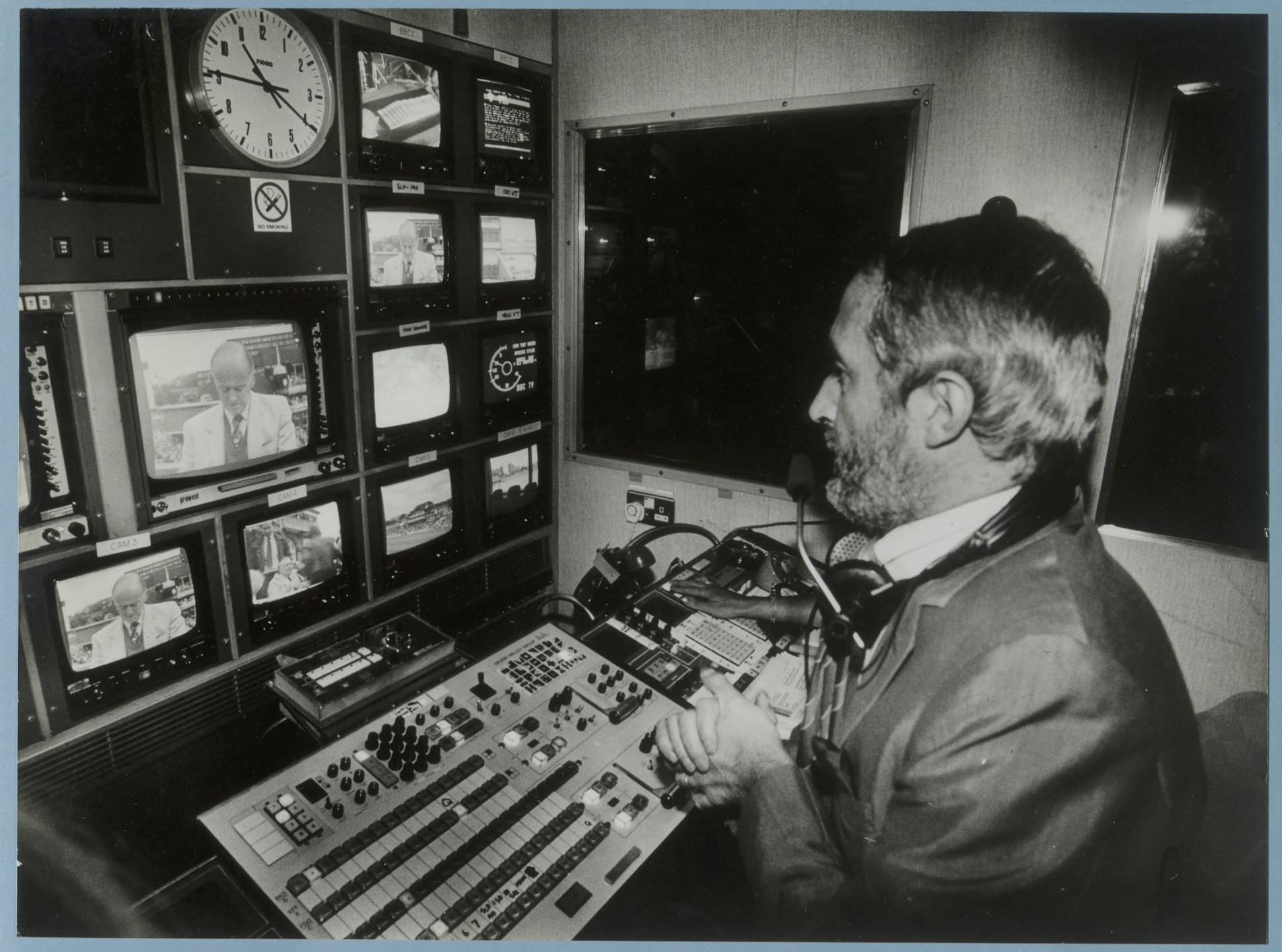
In 1964, the Head of Sport, Bryan ‘Ginger’ Cowgill asked Nick if he would produce the England Test Match against New Zealand from Headingley. This came about due to a ‘stand-off’ between two senior producers Phil Lewis and Ray Lakeland who headed up regional OBs in the Midlands and the North of England. Nick explained the situation:
Bryan Cowgill said, ‘I don’t know what the hell is going on with these regional bloody producers, but do you think you’ll be able to do the Test Match at Headingley?’ ‘Yes’, I said eventually. […] Typically, Bryan Cowgill said, “Well you can have a one-way ticket, and I will let you know if you can come back” [Nick Laughs]. So, I went up and did the Test Match and it was alright. And I got my phone call saying I could come back.
He would continue to produce cricket for the BBC for a further quarter of a century.
By 1965 Nick was a Production Assistant in OBs based at Kensington House in London and gaining experience on multiple sport OBs from cricket to tennis, swimming to horse racing. He directed broadcasts from a studio gallery, including the European Boxing Championships and gained experience editing telerecordings. He also edited football highlights for Match of the Day which began in 1964 on BBC2.
Gaining confidence in his role in television Nick also began to pitch programme ideas, the first being a documentary on Westminster Abbey Choir School. Nick didn’t recall if he ever received a reply on the idea, but it reflected an emerging confidence to instigate creative programme ideas.
The Move to Manchester (1966)
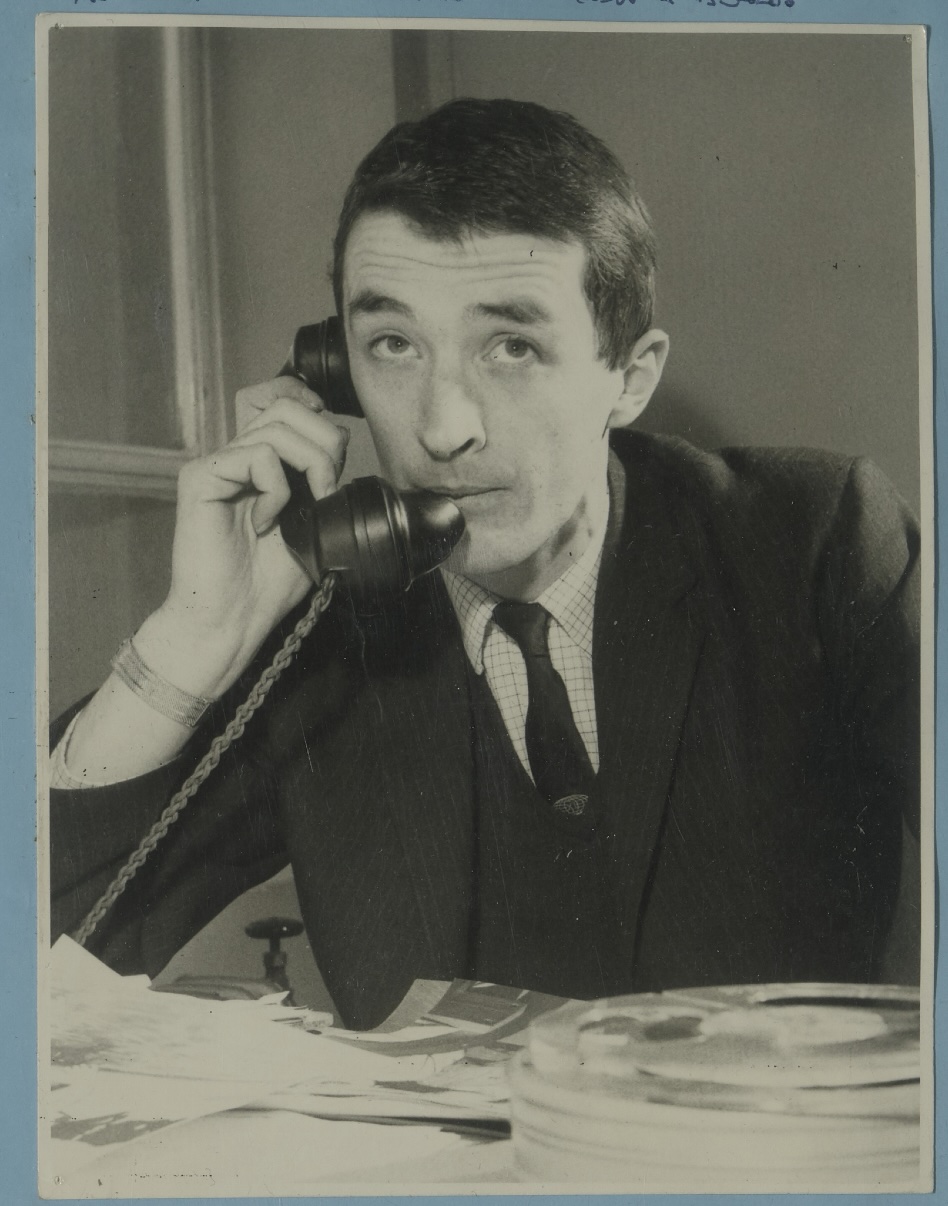
In January 1966, a job came up for a ‘Sport and OB Producer’ in Manchester. Having had several knock backs from producer boards in the south, Nick chanced his arm and applied.
After the interview – which went very well, even ‘Ginger’ [Bryan Cowgill] was kind – I saw the short list and realised that I stood a good chance as none of the rumoured candidates had entered.
Nick had to wait two months for the result, and to his astonishment, he got the job. The delay had been caused by Huw Wheldon, MD Television, who argued someone with only three years experience as a Stage Manager didn’t have the skills needed to be a sports producer. Bryan Cowgill, Head of Sport, supported Nick’s application and it was agreed he could take up the post on a 6 month trial basis. However, the move to Manchester had to wait until after the 1966 World Cup:
Bryan Cowgill would not let me go until August – after the 1966 World Cup which I was heavily involved with in VT. So I commuted the whole summer on my AP Grade!
Nick had gone from a radio studio manager to a television outside broadcast producer in the space of three years.
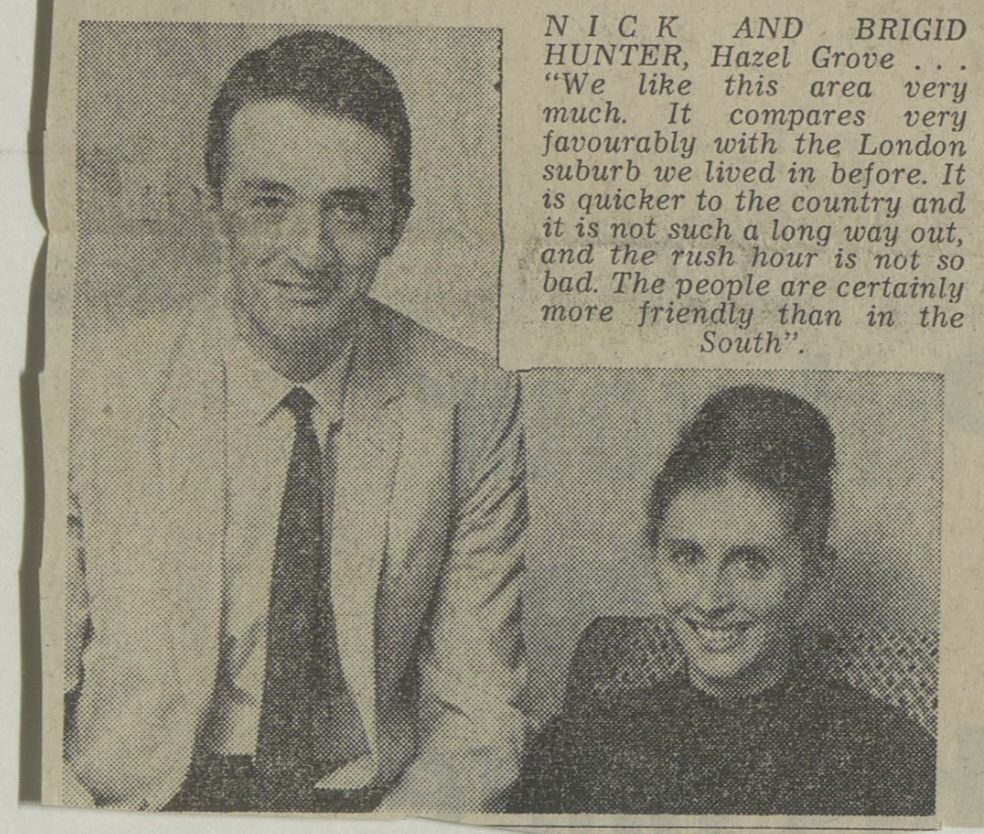
In September 1967 Nick and his wife Brigid, a BBC announcer, moved north from their home in Bromley to live in Hazel Grove, near Stockport. Interviewed for the local newspaper, The Stockport Express (1 June 1967), Nick remarked that, “The people are certainly more friendly than in the south.” However, the train commute involved a thirty minute walk to the station to an often unreliable service into Manchester and the BBC North West Broadcasting House then located at Piccadilly.
The job in Manchester had an expansive portfolio. Nick covered every sport possible in the region as well as producing OBs from concerts, circuses and theatres. “You name it, and I did it!” he remarked. Nick continued to specialise in the production of cricket, including the innovation of one day Sunday cricket with the International Cavaliers, presented by the imperious John Arlott.
From autumn 1966 he also brought the BBC Trophy Floodlit Rugby League Competition to BBC Two for the first time working closely with commentator Eddie Waring. Nick also worked closely with Ray Lakeland who continued to produce most of the sport in the region which would feed into BBC network programmes such as Grandstand, Match of the Day and Sportsview (which later became Sportsnight with Coleman).
Beyond sport, Nick increasingly produced light entertainment programmes from Manchester. Dovetailing his work in sport Nick produced A Spoon Full of Sugar, a roving OB light entertainment programme first broadcast in July 1967. Presented by Keith Macklin and Barbara McDonald the series visited hospitals and hospices across the country where they would ask patients; “What would you like to see…? Who do you want to meet…? Where would you like to go…?” The programme proceeded to introduce them to well-known personalities of the day at bedside.
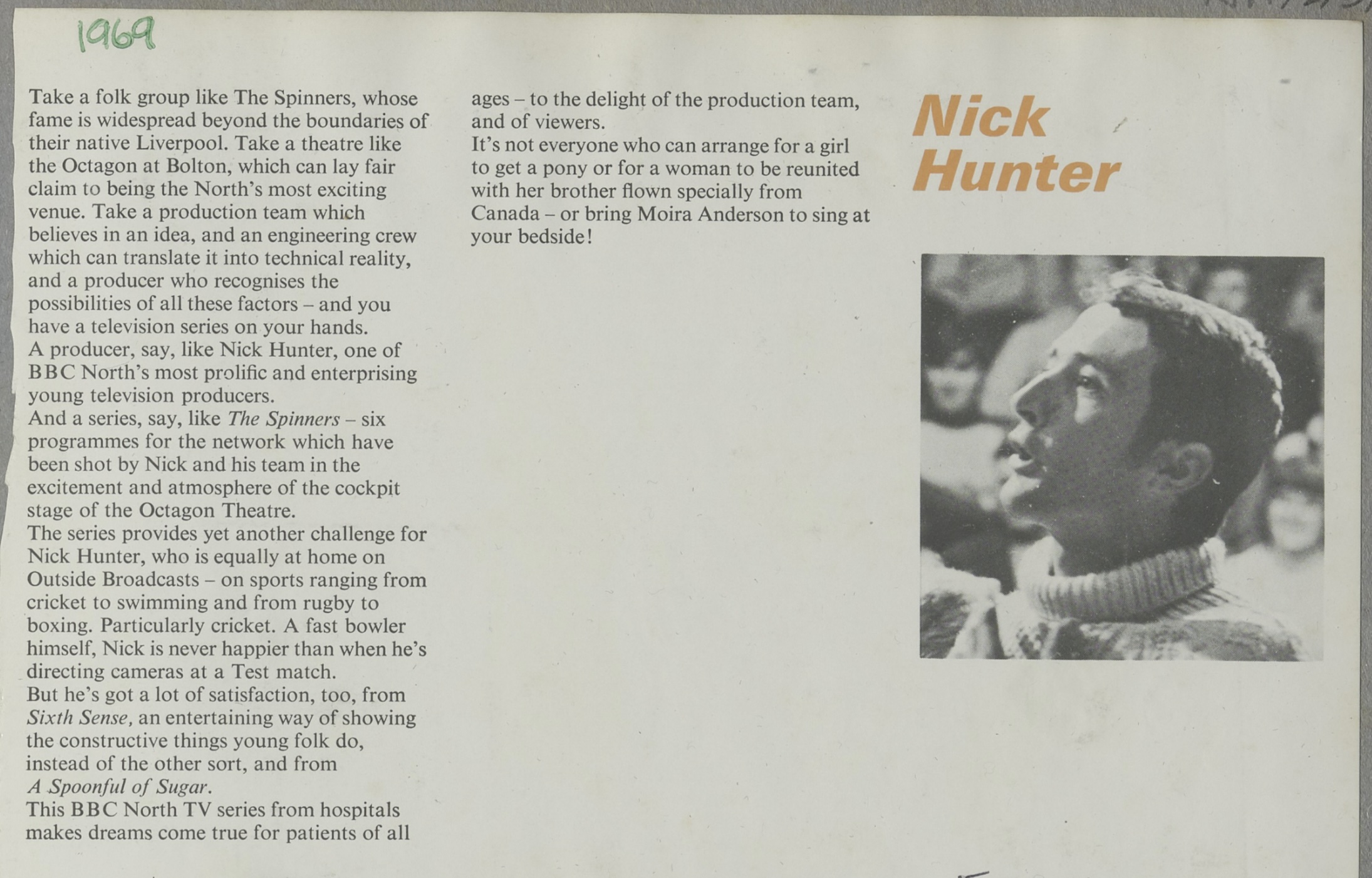
In 1968 Nick produced a new series Sixth Sense presented by Michael Aspel where sixth-form pupils aired their views on any given topic which were then scored by a panel of celebrity judges. One of the regular judges was former athlete Chris Chattaway, the first winner of the BBC Sport Personality of the Year Award. As Nick noted:
There was not enough sport to keep me fully employed for 12 months and I gradually got sucked into light entertainment.
In 1969, Nick felt confident enough to apply for a senior role as Area Television Manager at BBC North West, stating in his application:
I believe, most strongly, that the English Regions (and, therefore, the new Areas) have an important and vital job to do. They should be seen to do this job by the non-metropolitan English population – not only by producing their own programmes for local consumption, but by ensuring that London knows what is happening in the Regions, and that the Regions know what is happening in the Areas.
It was a sentiment which motivated much of Nick’s work, and continues to echo current BBC policy to move production to the nations and regions. As for the job, Nick was unsuccessful, and later noted:
That was the first time I had ever put in for a job and not been boarded!” but he accepted, “I hadn’t got the right credentials.
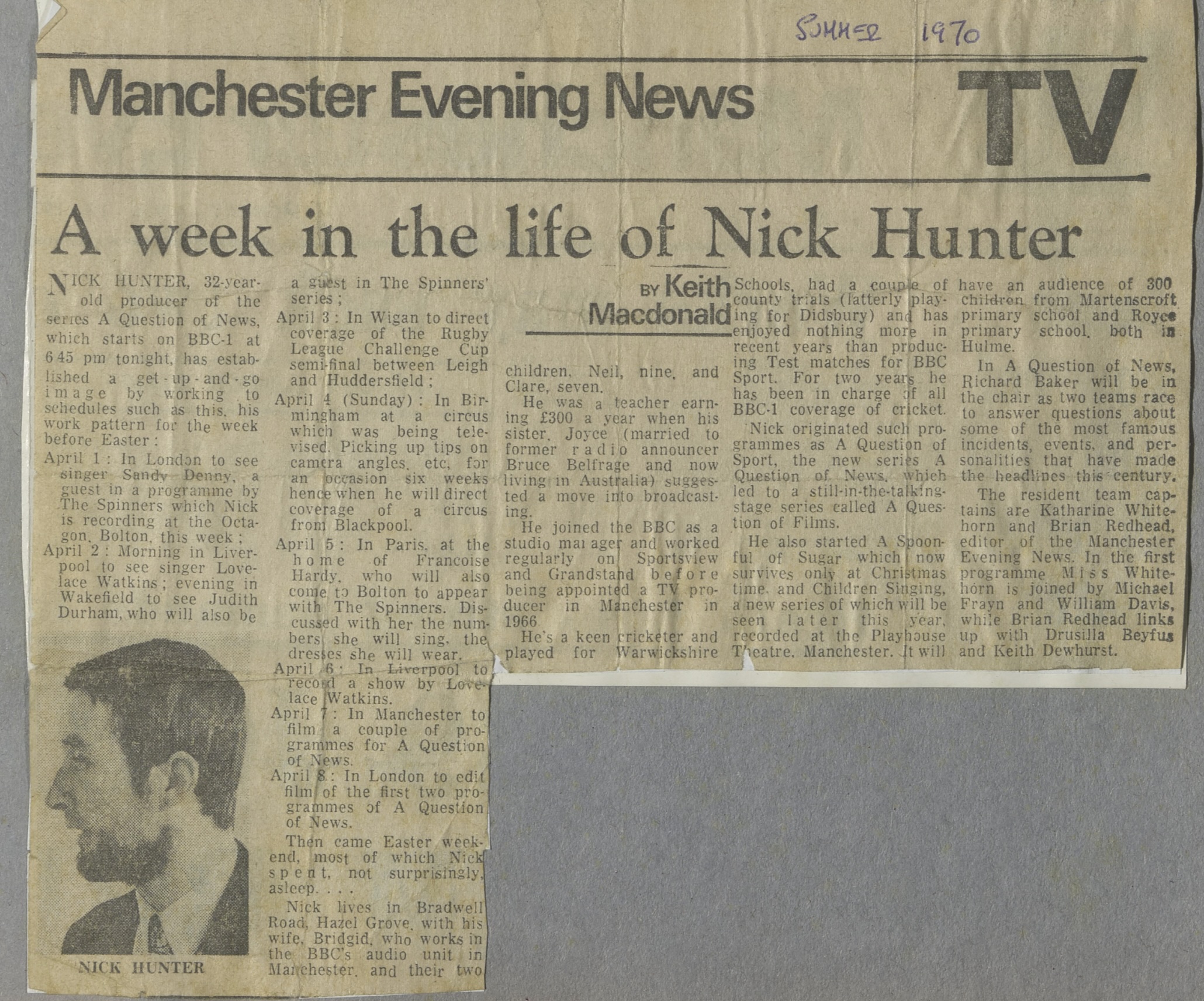
Nevertheless, by the early 1970s Nick’s career began to receive wider notice. An article in the Manchester Evening News television page published “A week in the life of Nick Hunter” which, in diary fashion, revealed the incredible variety and intensity of Nick’s work during this period.
In 1971, Nick’s impressive productivity led Bryan Cowgill and Phil Lewis to compel him to consider a move back to London and the OB Group at Kensington House. But Nick had other ideas and decided to stay in Manchester, much to the annoyance of both Cowgill and Lewis.
A Question of Sport
(Piloted 1968 – Launched 1970)
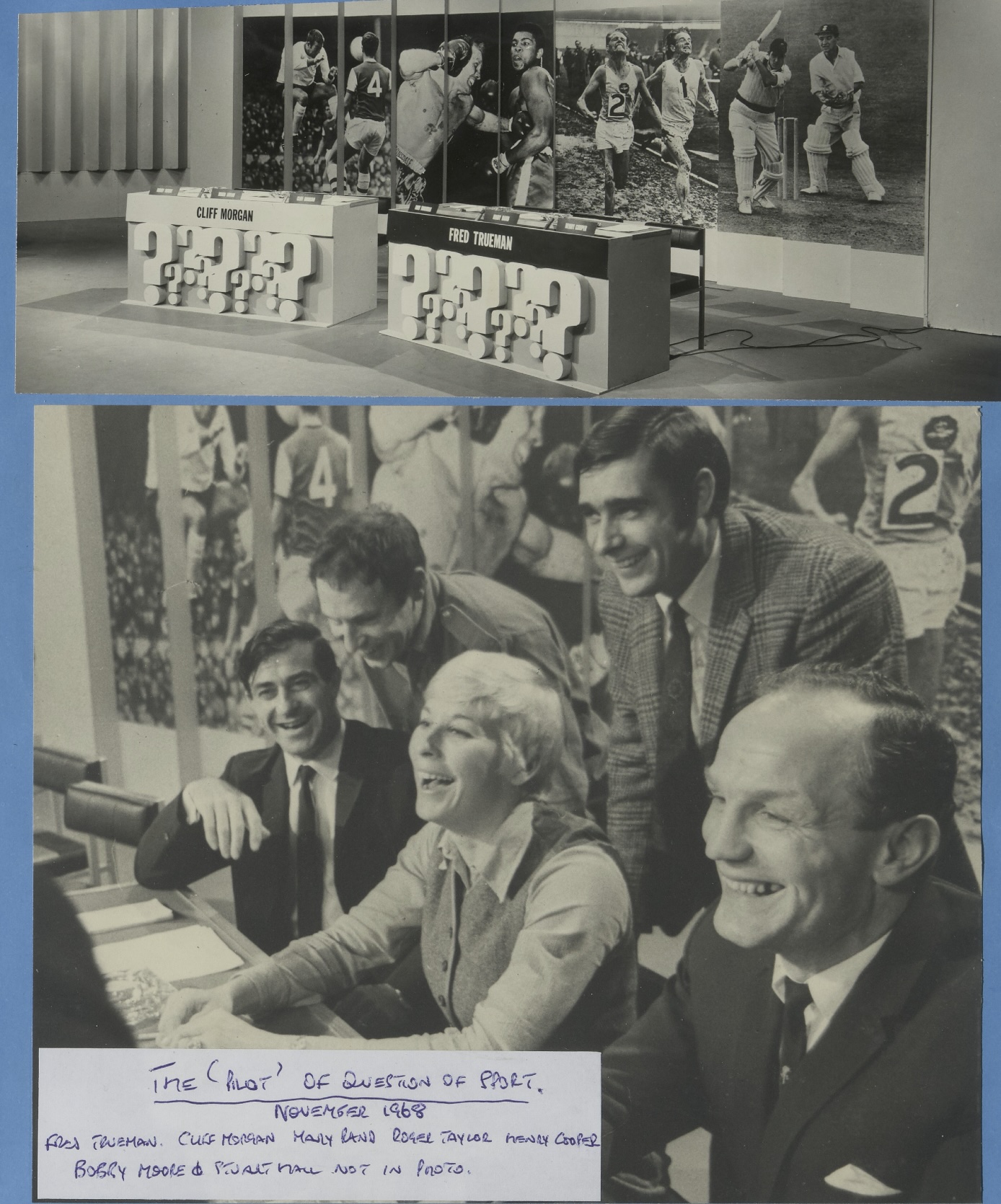
While a stage manager in the mid-1960s, Nick and fellow stage manager Duggy Hespe (who went on to produce music programmes) first pitched the idea for A Question of Sport to Bryan Cowgill. Nick explained how this came about and what the initial reaction was:
We come up with the idea when I was in London. The stage managers and I both came up with A Question of Sport. We were really both sitting there talking away one day. We were talking about quiz programmes, and some sports quiz programmes. The BBC had a library beyond compare, although it’s not as good as it damn well should be because they wiped too much stuff. But they had a hell of a good library anyway, and we said, “Why don’t we have a sports quiz on television which depends on the pictures?” And it’s not, “Who took six on the 18th August” You know, none of that. When you go to a sports ground it’s, “Who’s that?” and [click’s fingers] “Do you remember this?” And that’s the sort of programme we want. So we came up with it. And it was turned down in London, don’t want to know. Head of Sport [Bryan Cowgill] didn’t want to know about it.
Nick parked the idea while in London, but reprieved it once in Manchester when network was looking for new programme ideas from the regions.
A pilot programme was made for the North West region in December 1968, and the series first aired on BBC One on 5th January 1970. Presented by David Vine, the team captains were Henry Cooper and Cliff Morgan, with the first guests being George Best, Ray Illingworth, Lillian Board and Tom Finney. The programme was produced by Nick, designed by Paul Montague and directed by Hazel Lewthwaite, who stepped in to produce the series from 1972. Nick explained the premise of the series:
The whole idea of A Question of Sport in those days was ‘What happened next?’, so you think of a year “can you remember what happened on..?”. “Who is this?” so pictures of people. And we aimed every round had to be visual. So if there was no telly your programme was hopeless. You couldn’t take part in the programme at all. It’s moved on a little bit occasionally from there. But that’s the whole premise of the programme. And we also assumed that the sports men would know an awful lot about their own sports. Which, by and large, is true. There have been spectacular people who didn’t. But by and large it’s true. And we also, and this was very, very demanding, we also tried to push the people who came. So we didn’t ask Ted Dexter and put a picture up of someone in his team and say “Who’s that?” So we tried to push them. And it took off. It worked really well.
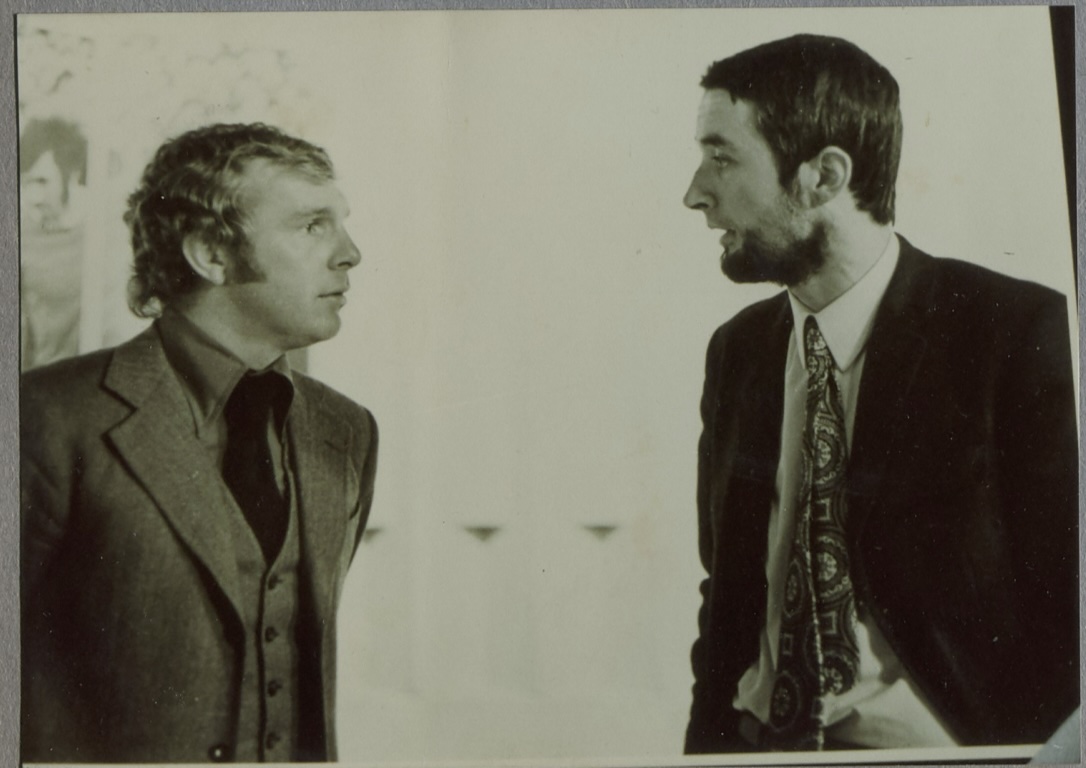
A Question of Sport is the longest running sports quiz programme in the world. Over a 53 year span, the programme only had four different presenters, David Vine, David Coleman, Sue Barker and Paddy McGuinness. The programme was shelved in 2023 following a drop in ratings mainly due to key departures of Barker as compare and the captains Matt Dawson and Phil Tufnell in 2020.
The popularity and longevity of the programme over half a century is testament to the visual simplicity and light entertainment values of Nick’s original idea. As he said to me back in 2008:
If it wasn’t ‘staff no fee’ I would have made a fortune out of it [laughs].
Senior Role in Manchester (1972)
In May 1972 Nick was promoted to Chief Assistant, Television, to Derek Burrell Davis, the Head of Network Production Centre, Manchester. Nick’s scrapbooks contain a number of letters of congratulations on his new role. However, he notes,
There were no letters of congratulations from anyone in sport TV, entertainment TV or from the hierarchy of those I had been working with.
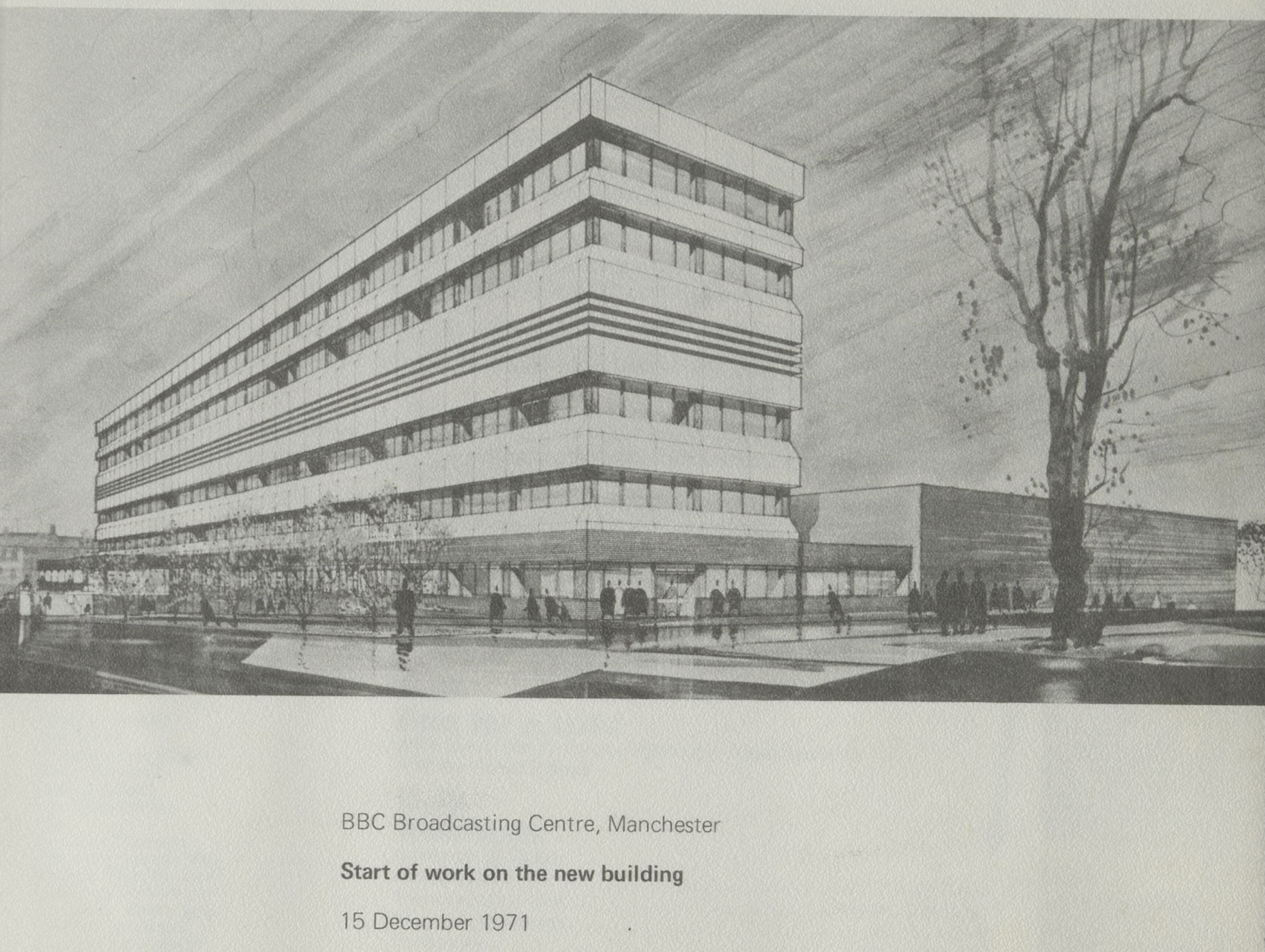
Many had hoped Nick would return to London, many more were delighted he decided to stay in Manchester. Manchester and the north saw new investment in television production in the mid-1970s including the newly built Broadcasting Centre on Oxford Road which was being built in 1974 and became operational in 1975. Another senior role opened up: Editor Entertainment in Manchester. Nick got the job in March 1974, without the need for an interview. Burrell Davis had suggested he apply. “So it was not a career move,” Nick later reflected, “more a necessity to increase Manchester Light Entertainment output.”
The joy of getting the new role also came with increased internal politics within the Corporation. In 1974, Alastair Milne moved from Scotland to Director of Programmes, Television and initially offered 6 x 6 ‘slots’ for light entertainment from Manchester. “It was the jackpot” Nick recalled. With visions of new ideas for the network and talent to showcase Nick and Burrell Davies headed to London for a confirmatory offers meeting with Head of Light Entertainment, Bill Cotton, Milne and Cowgill, who had recently been promoted to Controller of BBC1. In his scrapbook Nick recalls what happened:
We walked into the meeting with CBBC1 (Cotton was there, Alastair Milne was sitting in the corner reading his mail!) Bryan Cowgill then cancelled our entire light entertainment output and left the room after about two minutes. It was the worst moment of my career and I was not a happy bunny.
Professionally, 1975 became a tough year for Nick. Milne and Cowgill quashed new ideas from regions and tried to draw Nick back into the fold of sports production. Nick was angry and believed this was Cowgill’s revenge for him not taking the London post in 1971.
After a few weeks of getting to grips with it all I went back into sport. Lakeland had left, just left, and to cut a long story short I wound up walking straight into his job. I was back where I started in 1966, but with rather more experience, and an ironic view of what London politics can do to a region if its leadership is weak and self-serving.
Snooker at the The Crucible (1977)
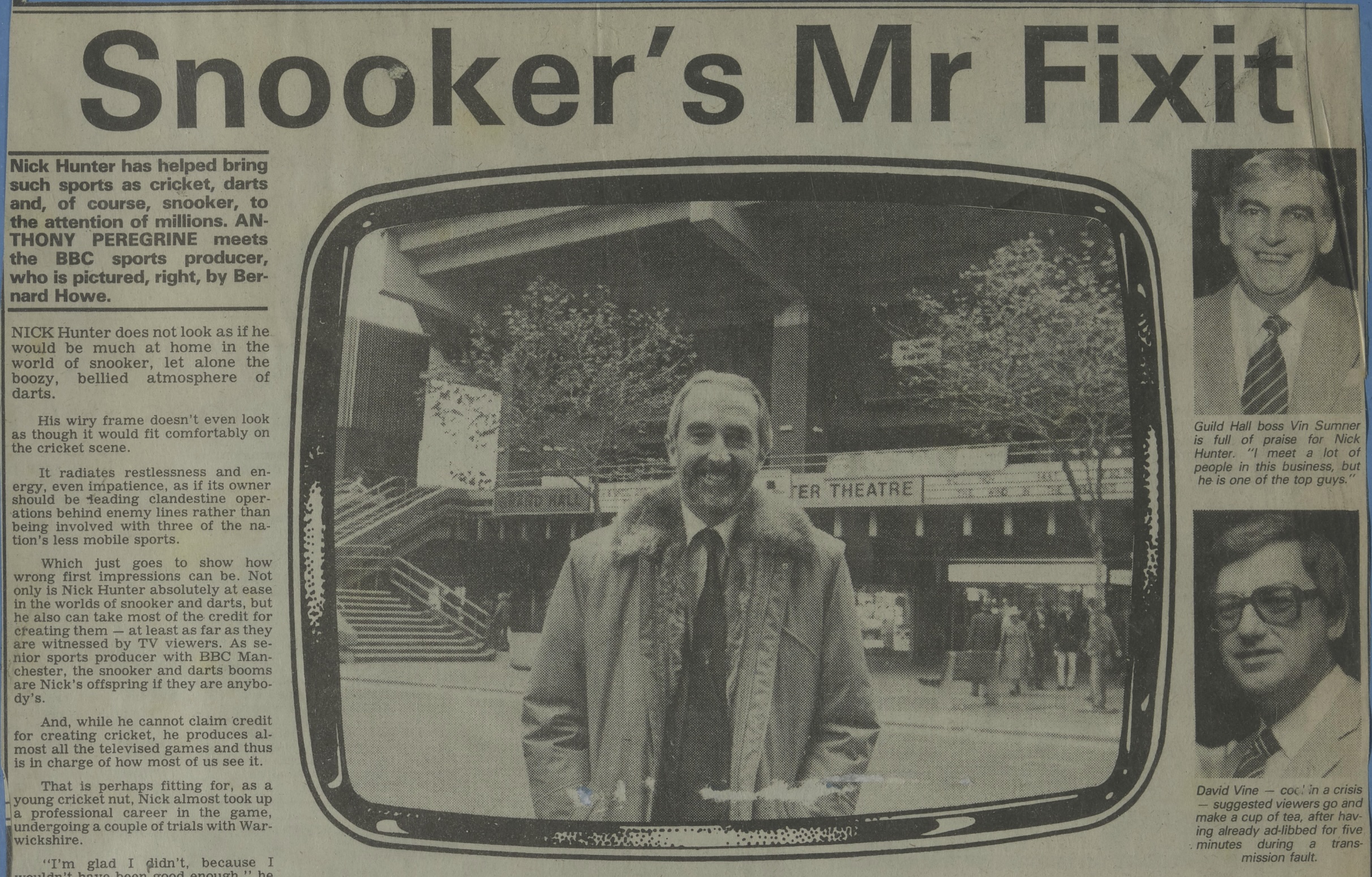
Nick returned to producing sport in February 1976, remaining in Manchester. One of his first OBs in April 1976 was coverage of the Embassy World Professional Snooker Championships from Wythenshaw Forum, Manchester. Nick had previously covered snooker in 1967 in black and white from the Dickinson Road studios in Manchester. But it had been many years since he had covered the game. The final between Ray Reardon and Alex Higgins was the best of 53 frames played over four days.
They had a whole day off in the middle of the final so we could stick our lights and camera and everything in. […] I went to see the championships in Wythenshawe and I hadn’t seen competitive snooker very much and I was absolutely knocked out by it. Higgins was unbelievable in these championships. He beat Spencer by an odd frame, he beat somebody else by the odd frame, and I watched these and I thought, “Well, what are we doing? Why aren’t we covering this event?” And when I got into the final and when we started doing our bit of the final, Reardon had won it basically. Higgins could still have managed to win it, but he would have had to have won eighteen frames on the trot or something. He was out of it. They didn’t like the lighting. They hated the lighting. And we had to redo the lighting and Reardon threatened not to play, so it was a bit of a nightmare really.
Nick felt the game warranted more coverage and pitched the idea to Aubrey Singer, then Controller of BBC Two. Singer agreed to a programme every day of the 1977 Championships, but then the tournament moved to The Crucible Theatre in Sheffield. The dates did not work for the BBC schedule. Nick ended up covering highlights of the semi-finals, late on BBC 2. Grandstand took minimal live coverage in between the horse racing from Ascott, with highlights in the evening on BBC Two. It was a start, but Nick felt the championship still warranted more coverage and the format of the finals needed to be more accommodating to television.
The story of how the World Championships ended up at The Crucible is now well known. Carole Watterson, wife of promoter Mike, recommended the venue after watching a play. The centre of the arena was the perfect size for two tables, a foot or two narrower and the players would have struggled to cue their shots. In 1978 Nick got his wish to cover the entire fortnight of snooker, with daily evening highlights on BBC 2 presented by Alan Weeks with commentary by Ted Lowe. There was limited live coverage on Grandstand, but the Championship received its greatest ever coverage which opened the way to its boom years in the 1980s.
Nick also persuaded Watterson that the competition had to reduce the number of frames played, and the new format was literally written on the back of a fag packet. Nick’s engineering manager John Crowther also devised new lighting which helped the cameras capture both the concentration and pangs of anxiety on the faces of the players without creating distracting reflections on the balls.
John Crowther devised this strip lighting at the top of the table with the strip lights, with a sheet underneath. A white sheet to diffuse the initial light. John Spencer once said, he reckoned he could fry an egg on the side of the table when the television people had the lights on for more than a couple of hours.
With its cast of characters, most crucially Alex Higgins, and the daily coverage of the ins-and-outs of matchplay, snooker began to create multiple storylines that caught the imagination of viewers. Barry Hearn labelled snooker “Dallas with balls”, and the leading characters of the sporting soap opera made as many tabloid headlines off the table as on it. It all helped fuel interest in the drama of the sport and its cast of characters.
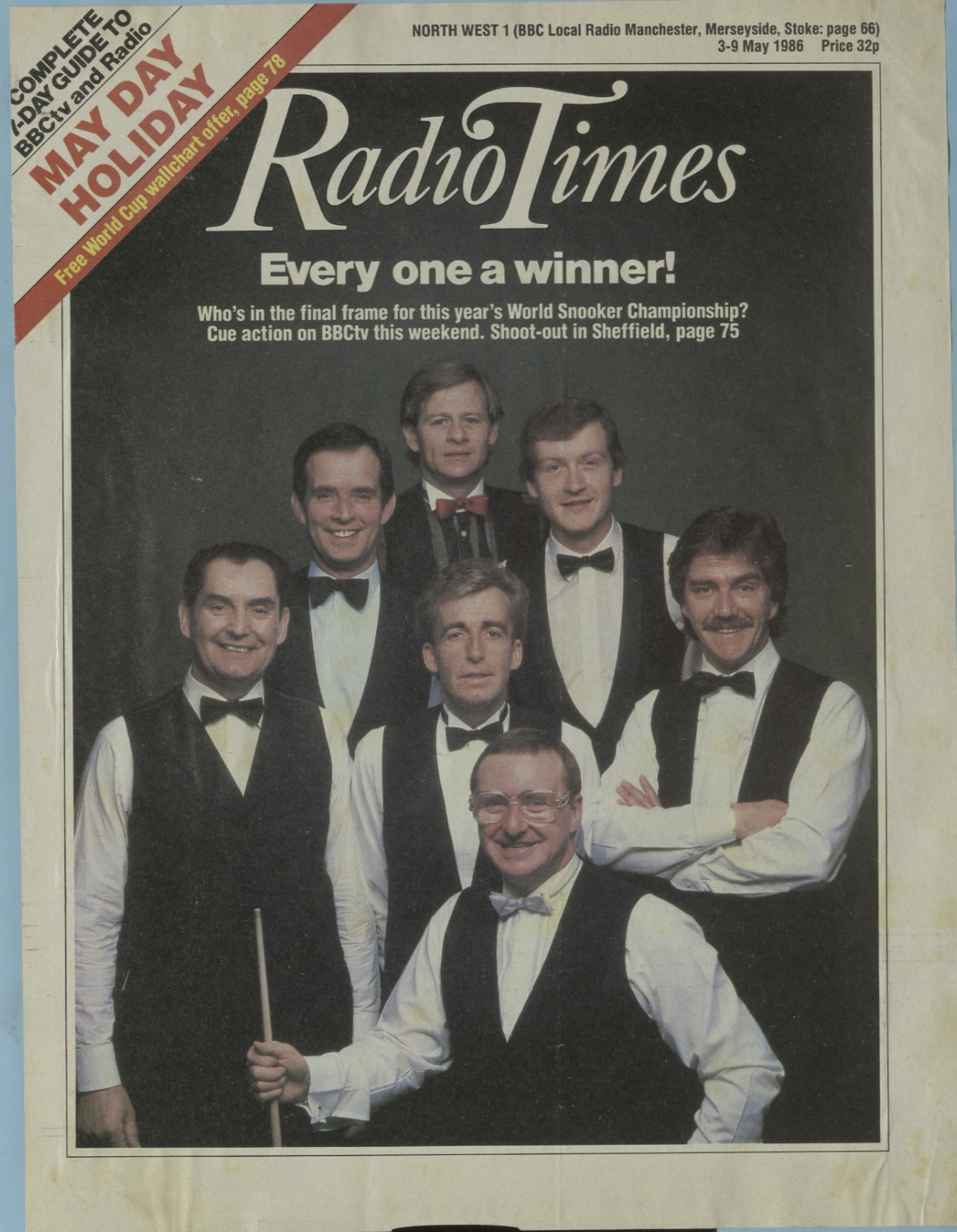
Nick soon became the Executive Producer of Snooker across all of the BBC’s coverage, including Pot Black which had begun on BBC Two in 1969. He had to fight some political battles with executives in London from his base in Manchester in negotiating the BBC’s contracts with the snooker promoters, but he was so synonymous with the BBC’s output of the sport that the Radio Times once gave him a producer credit of ‘Snooker Nick’. The BBC’s coverage of snooker in 1980 and 1981 was nominated for a BAFTA in the Best Actuality category. The certificates of nomination sit proudly in Nick’s scrapbooks, along with a note:
Had produced greatest Test series in the UK in 1981 with Ian Botham smashing Australia all over Headingley, Old Trafford, The Oval – not even nominated!!
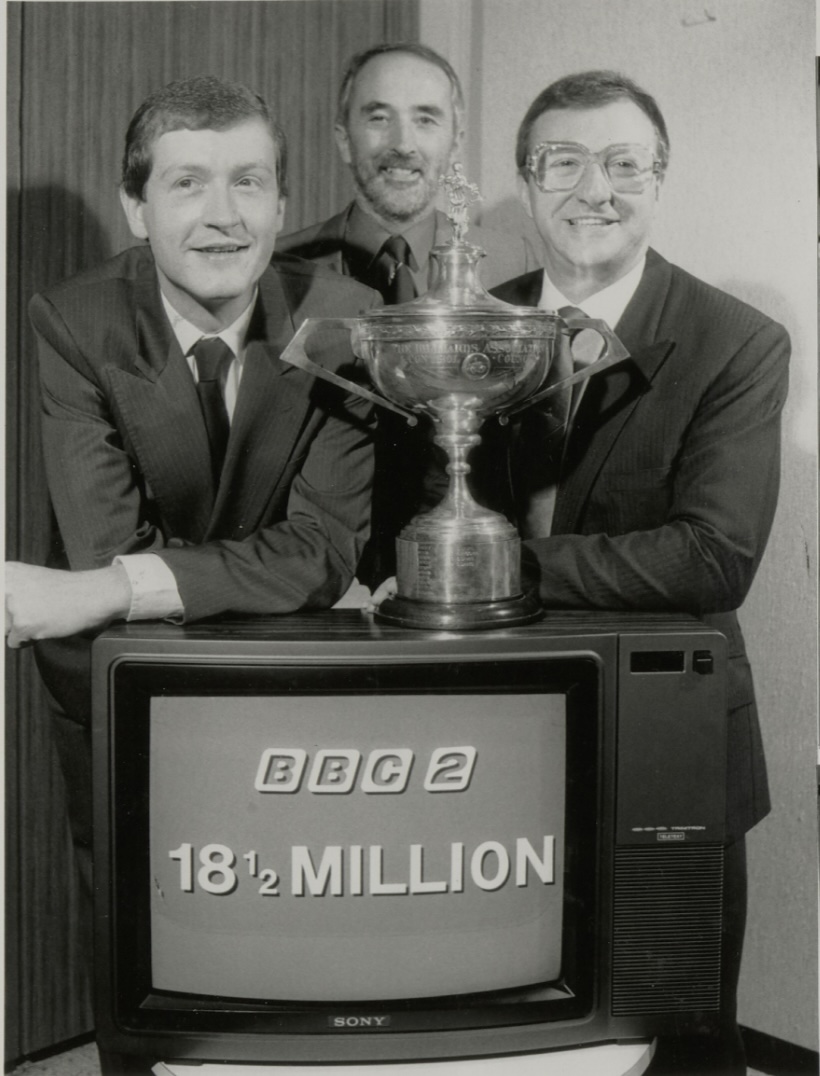
When ‘Botham’s Ashes’ is added to the ‘Black Ball Final’ between Steve Davis and Dennis Taylor in 1985 with a record 18.5m viewers on BBC Two, Nick produced two of the most memorable and oft-replayed moments of live sport ever transmitted by the BBC. They sit alongside Kenneth Wolstenhome’s commentary of Geoff Hurst’s third and final goal of the 1966 World Cup final and Cliff Morgan’s commentary of Gareth Edward’s try for the Barbarians in 1973.
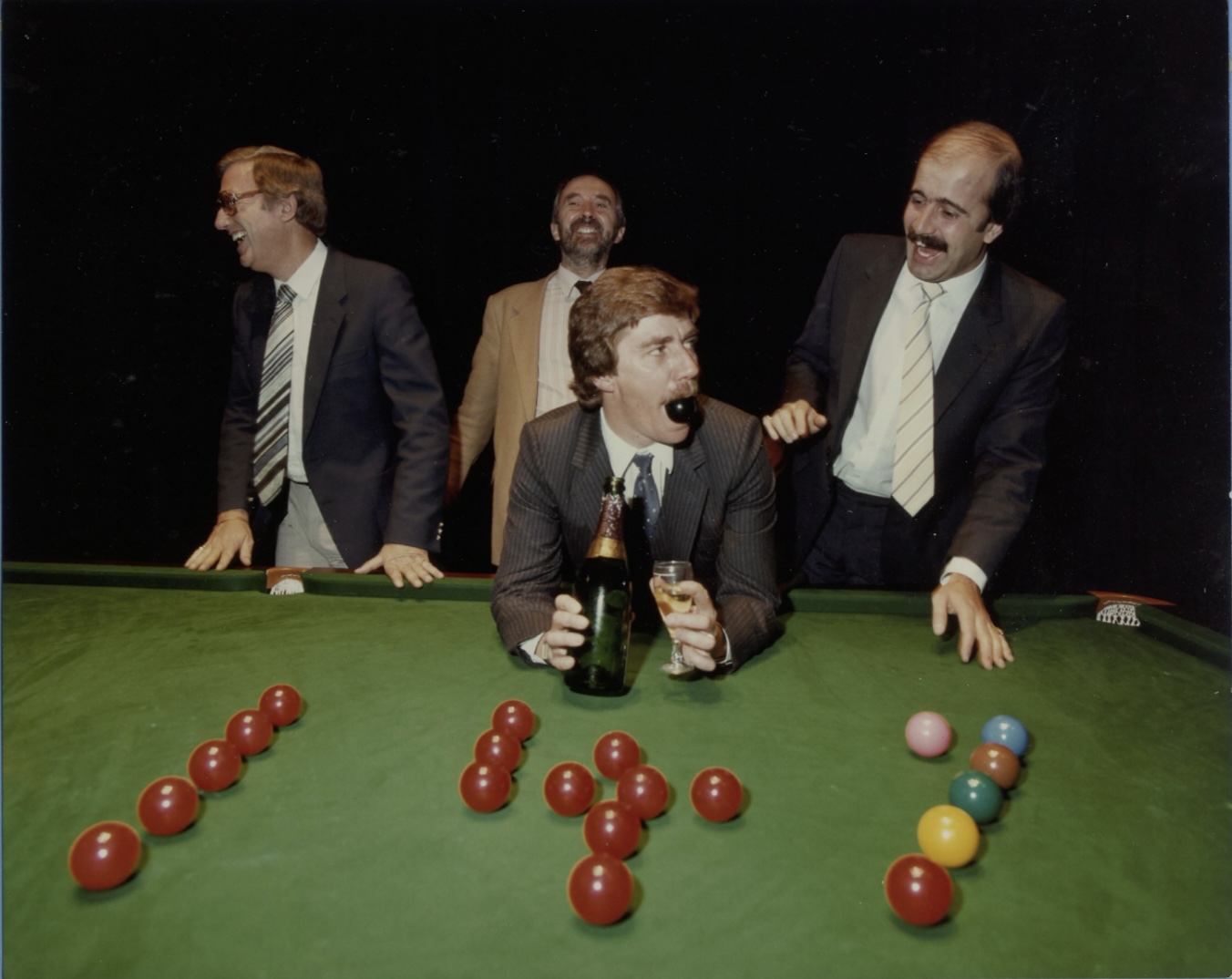
Snooker had also had its wonder moment in 1983 when Cliff Thorburn made the first televised 147 break. When I asked Nick about his favourite moments of commentary, he said:
In snooker terms, I think Jack Karnehm had a real deft touch. He was the chap who said, “Good luck!” when Cliff Thorburn was about to pot his 147th black, you know. That was a real golden touch. He hadn’t written it down, it was just Jack saying “Oh, for god’s sake just pot the damn thing”. “Good luck, mate” he said. Wonderful.
Despite the popularity of the single frame format of Pot Black, nobody except Nick could see the potential for snooker to become such compelling television in almost every household in the UK, particularly amongst female viewers with many housewives tuning in during the day. Reflecting on the success of snooker Nick suggested there was a successful recipe for sport on TV:
• Does it lend itself to TV coverage?
• Are the Brits any good at it?
• Are the competitors ‘characters’?
• Will the viewers understand it easily?
• If ‘yes’ to all 4 – you have a chance!!
“Snooker, bowls and darts all score 4 yes’,” he remarked, “There are still others! I still believe tug-of-war is one!” he joked.
To sum up the reasons for why snooker became such a success Nick saved an article by Christopher Dunkley, the television critic from the Financial Times of all places. In a full page review of snooker’s addictive qualities, Dunkley sang the praises of the BBC’s – Nick’s – fabulous coverage:
There is too, of course, the superb professionalism of the BBC’s outside broadcast work. The standard varies slightly but I have not seen a single shot out of focus this year and the vision mixing has been masterly; the cutting from big-close-up on the player’s face conveying the concentration involved to wide shot of the table to show the possibilities, to mid-shot on the moving balls to show the detail of play, to quick cutaways to the seated opponent to show reaction, has a narrative force lacking from all but the best drama.
(FT, 9th May 1984)
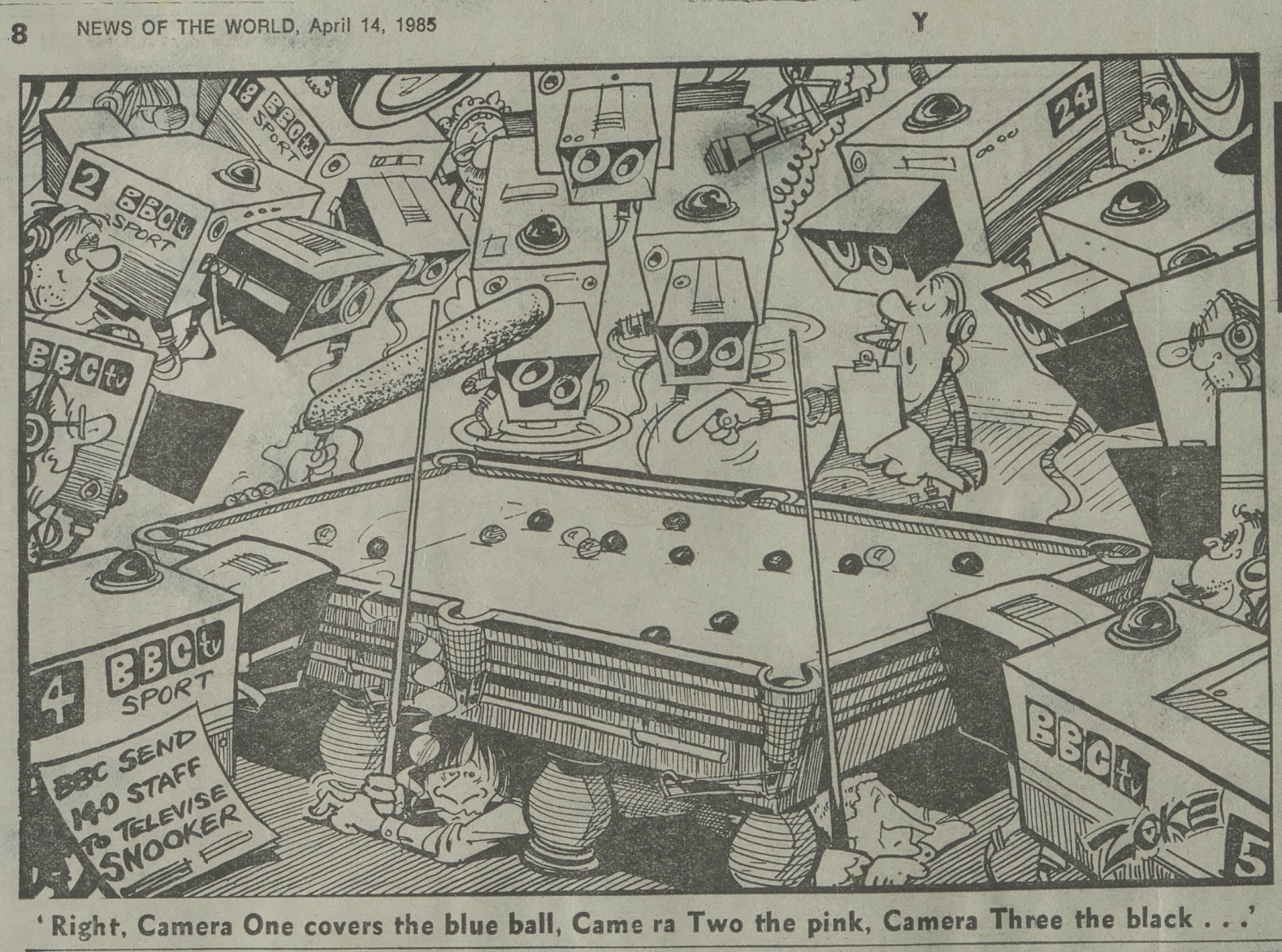
While Nick achieved many great things in his television career, it is arguably the annual ‘snookerfest’ from The Crucible which remains the greatest of them, and his lasting legacy. 300 hours of snooker are recorded and 100 hours transmitted. The crew work across 17 days and sometimes 15 hour shifts. It remains the longest continuous event the BBC covers. As audiences soared and compliments poured in from viewers, the BBC chiefs could not believe their luck. In an interview for The Observer in 1986 Nick reflected on the early years at The Crucible when things took off:
We used to say it to ourselves, ‘It will never be like this again’ – and in a sense it can’t be, although we’ve had even bigger audience figures since. It was like having a new baby.
So said Nick, the father of TV snooker!
Darts (1978)
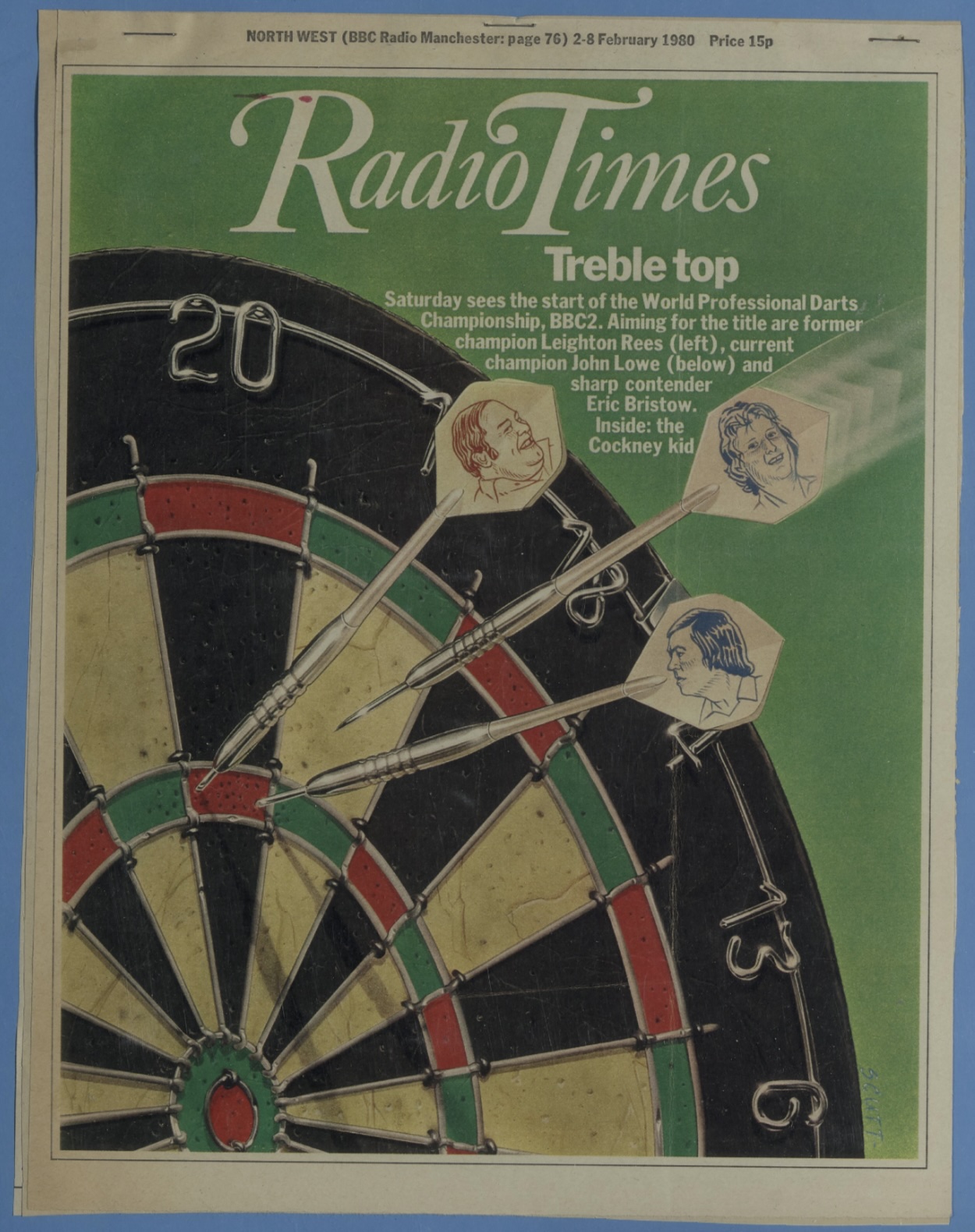
In the late-1970s as Nick was promoting the merits of snooker, he was also doing the same for darts. Nick’s first contact with darts was stage managing a documentary on former world champion Tom Barrett for the BBC Two series Time Out which looked at the expanding world of leisure in the 1960s. Darts then had six million active players, mainly in the pubs and clubs up and down the country. In a note on the origins of darts on television Nick recalled:
Up until then darts to me was an occasional pastime in the pub, a spit and sawdust game that was more of a challenge to my mathematics than anything else. Tom changed all that. Part of the film was about his playing of the World Title he was defending that year, and I followed his progress with increasing disbelief until he kept his Title in a pulsating final at Alexandra Palace. I got to know Tom quite well over the few months we filmed. I noticed that this rather shy, unassuming man was transformed once his darts were out of their box. He was a star in his world – and he knew it as he signed autographs before his match.
In 1976 producer Sid Waddell – who had moved to BBC North West as a production assistant in features having previously produced the popular Sunday lunchtime quasi-sport programme Indoor League for Yorkshire Television – produced a documentary feature on Alan Evans called ‘The King of Darts’ for Network on BBC Two. ITV had previously covered the World Darts Championship darts in 1972, and Waddell continued to champion the talents of leading players such as Hart, John Lowe and Leighton Rees whenever he got the chance. This included a brief slot on for the Vernon’s Treble Top Championships from Chorley on Grandstand in 1977.
In the same period, Controller of BBC Two, Aubrey Singer, asked Nick if there was any other sport which could receive similar treatment to snooker? Aware both producer Bill Taylor and Waddell were keen to get darts on the screen, Nick made the suggestion to Singer who eventually agreed to put the Embassy World Professional Darts Championship on BBC Two in February 1978. The coverage from the Heart of the Midlands club in Nottingham was introduced by David Vine, with commentary by Sid Waddell and produced by Nick.
So began another boom television sport, with a fascinating cast of talented characters and a highly eccentric voice of Waddell, the Cambridge history graduate who conjured up references to kings and battles of yore to liven up the story.
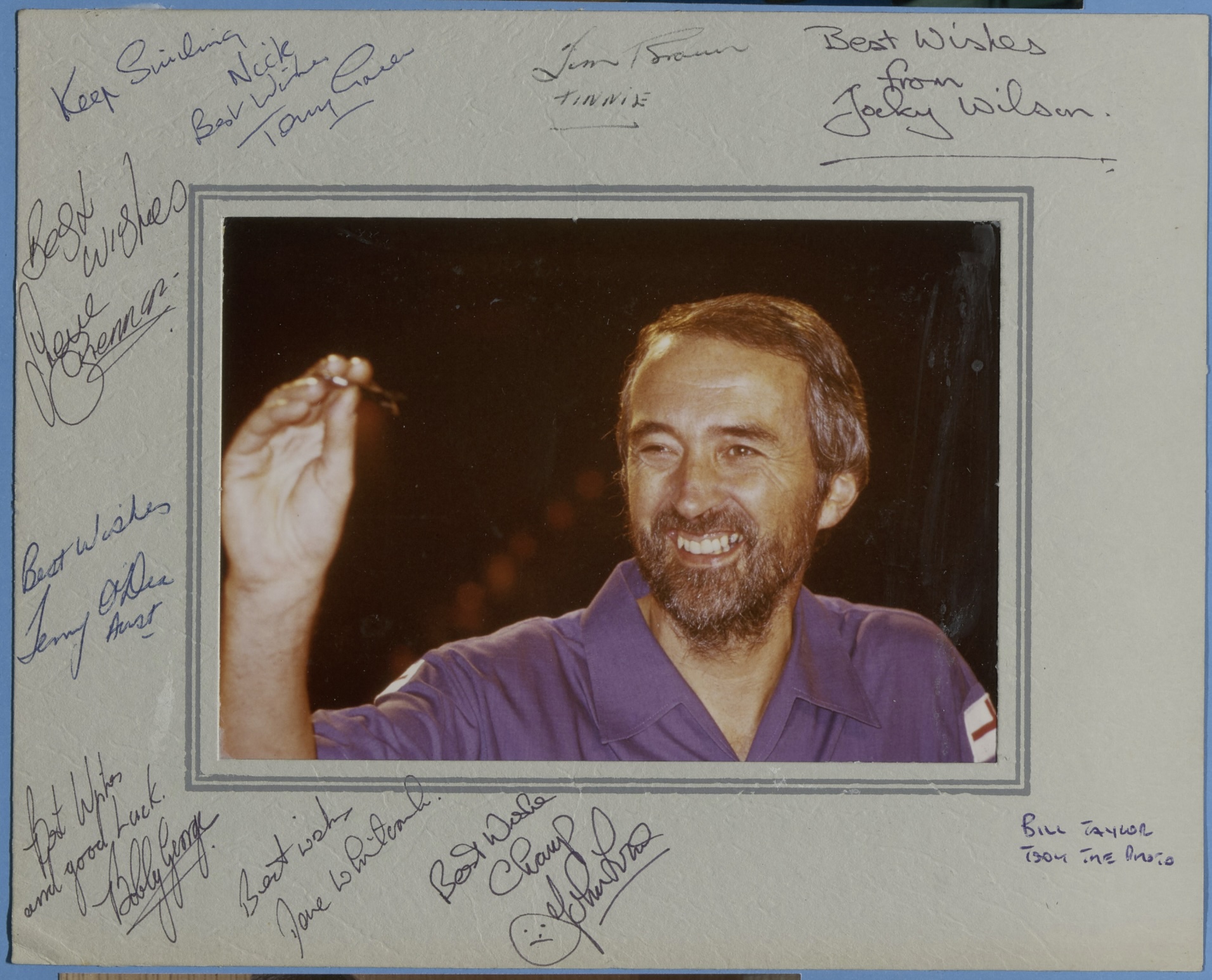
Although darts is a relatively straight forward sport to cover, it is a “sport in miniature” and the camera has to pick-up in detail action in the 20 sections of the board. Nick recalled on either the third or fourth day of the coverage Don Mackay suggested using a split screen simultaneously showing the player throwing the dart and the dart board. It revolutionised the coverage for the viewer and made the directors life a bit easier not having to constantly cut between player and the thrown dart as it landed in the bed.
Another problem was keeping up with the rapid scoring and getting a close-up of the right double finish. Nick picks up the story of how this was solved in his note on coverage written in the late 1980s:
The scoring was solved by a special computerised black box fed electronically superimposed on the screen. It enabled me to show the viewer the scores at any time during a game while I was still covering the players. Tony Green – that well known M.C. and scorer on stage – solved the finishing by forecasting the final double needed. He has worked out not only all finishing sequences, but which players favour which sequence. It is no easy matter for the cameraman with a very tight lens to focus on one double, or to move across the board from one to another, and Tony’s astonishingly accurate forecasts, meant I could get to the camera as the dart hit the board.
In the BBC’s first significant coverage of darts, in 1978, Leighton Rees sunk a 10-dart finish, the first ever televised and the crowd went wild, and Nick said they were “the arrows that made darts live up to all our expectations”. Darts became a huge hit with BBC Two audiences. It grew again following the partnership between the newly formed PDA and Sky Sports in the era of Phil Taylor, and more recently has attracted even greater support with the prodigious young talent Luke Littler.
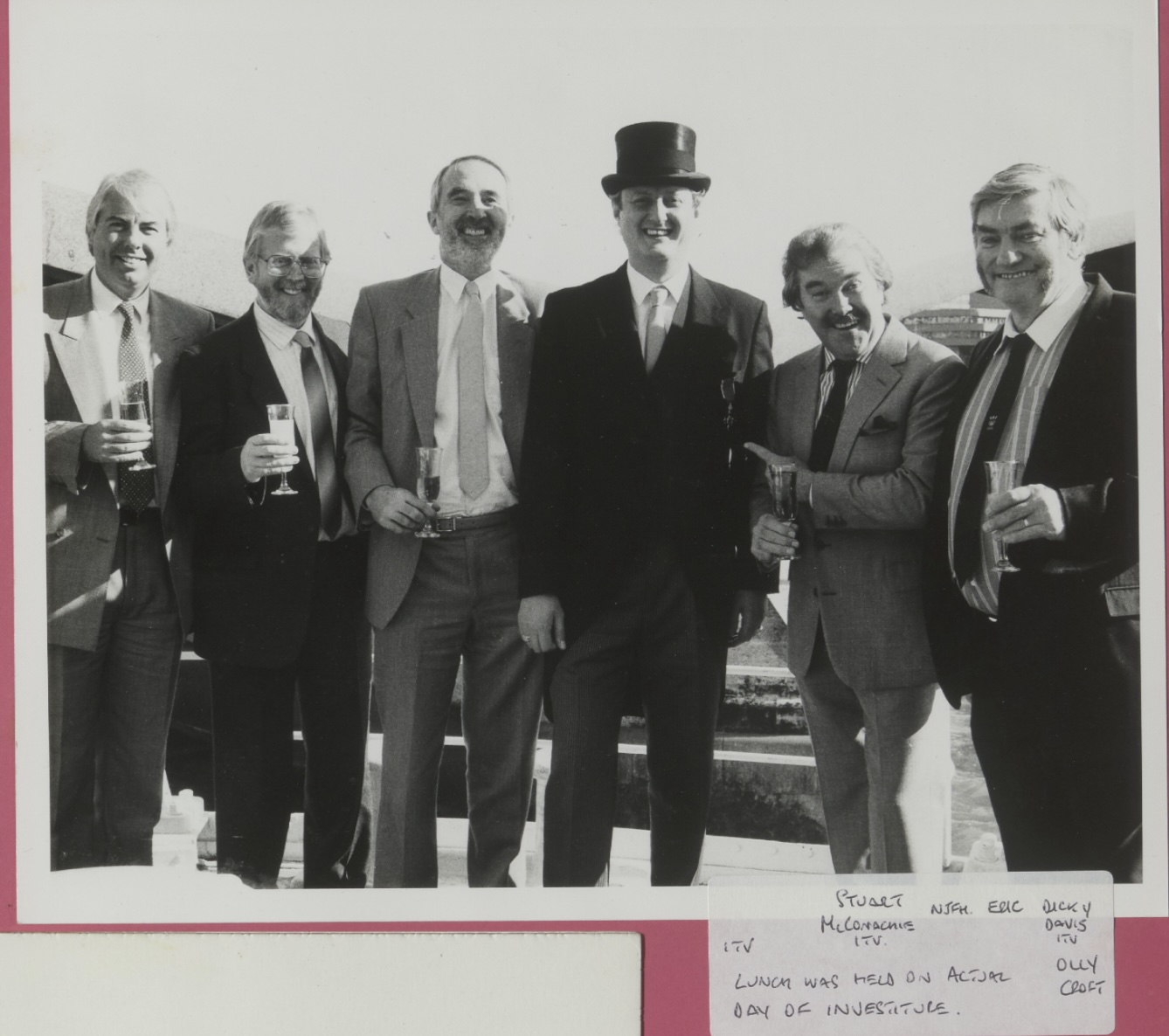
Darts is now bigger than snooker in both its fan base, income and riches for the players. It is the second most watched sport on Sky after football. Some legacy for the early pioneers of television coverage back in the 1970s.
Assistant Head of BBC Sport..(1986)
By the mid-1980s as Sports Editor in Manchester Nick was overseeing a significant amount of sports production from the region. He had a team of 15 producing 700 hours of sport a year. In a memo to the Hugh Williams, the newly installed head in Manchester, Nick wrote:
I would venture to suggest that we are probably the most productive department per head at the Beeb.
The backbone of this coverage was snooker, darts and bowls, and the production of A Question of Sport. Coverage of Horse Racing, Rugby League and cricket were directly fed into and paid for by BBC network, with Nick the BBCs principal producer of the latter, a role he had held since the late 1960s. With regards to sport, the North West was a powerhouse of production expertise for the BBC.
In September 1986 the post of Assistant Head of Sport came up, and Nick, possibly against his better judgment, decided to apply. Nick’s commentary in his scrapbooks again pick up the story:
In the autumn of 1986 I had been ‘tapped up’ by Jonathan Martin who wanted me as his No.2 in Sports Department, London. Perhaps he realised I was running out of steam in the scanner after 20 odd years ‘on the road’. Perhaps he sensed that with the constant HNPC changes I was getting frustrated with the way Manchester was being run. At any rate I was flattered and, to my surprise, interested. So it came to pass that the job was advertised, boarded and my Manchester stint was over.
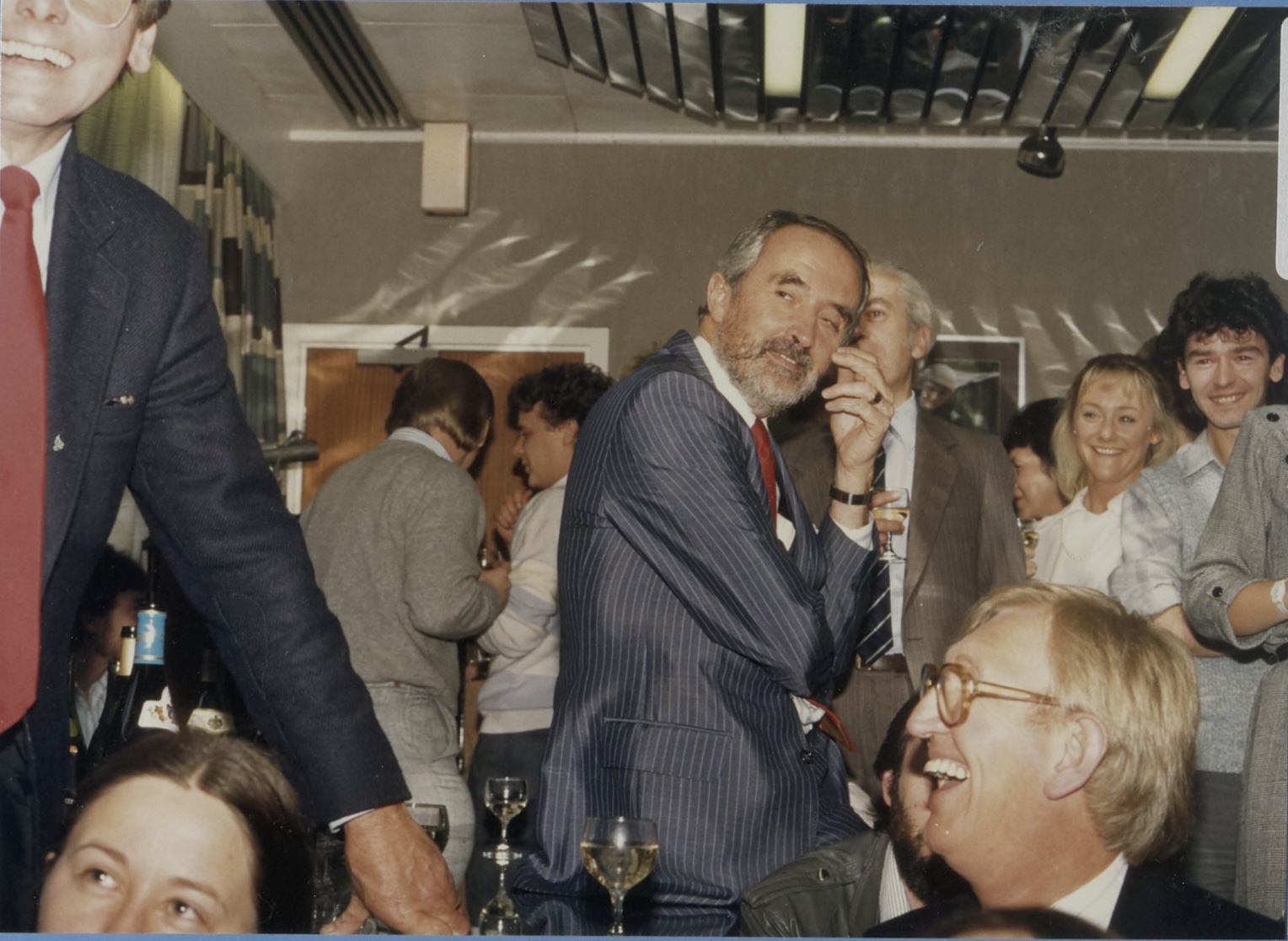
John Crowther organised a farewell gathering at the Guild Hall, Preston and bussed people from Manchester for a spoof ceremonial event called “The Chapel of St Higgins-On-The-Table” in honour of Nick with humorous anecdotes, singing and poems from friends and colleagues. A VHS recording of the event survives in the archive.
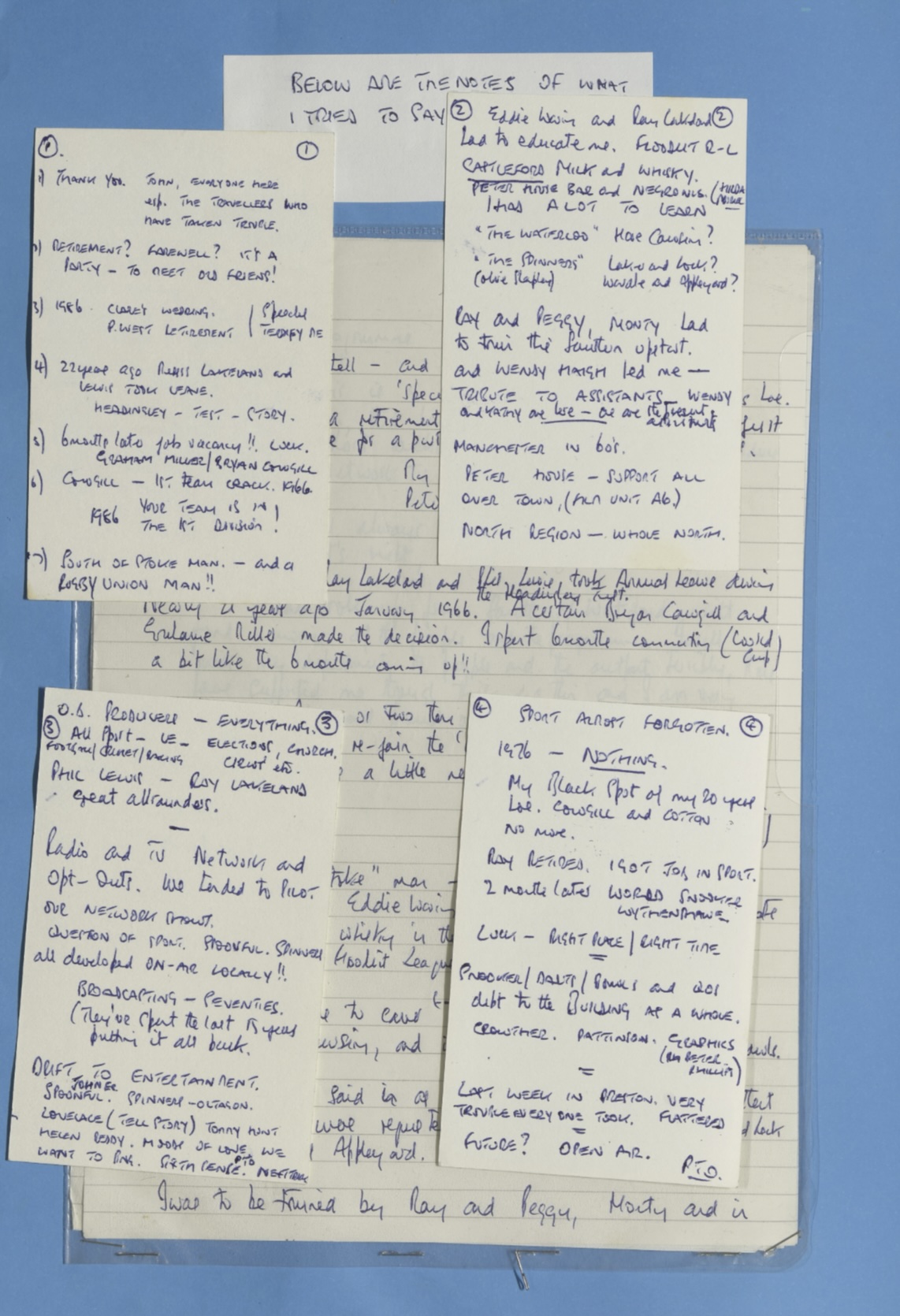
The move to London offered a lot of promise, but Nick soon found that Martin retained most of the responsibility for sport output. It left Nick to pick up the pieces of either challenging contract negotiations with broadcast talent, or quite boring administrative duties on various committees which he viewed as largely a waste of time. in his scrapbooks Nick comments:
I did negotiate the new snooker contract but this was an oasis in a desert.
He also discovered various feuds across the sports department which he labelled “a disgrace”.
After little more than two years in the Assistant Head role an invitation was made to become Head of Production for the new Sports Channel, being set up by British Satellite Broadcasting. Nick resigned from the BBC in September 1989 after nearly thirty years employment at the BBC.
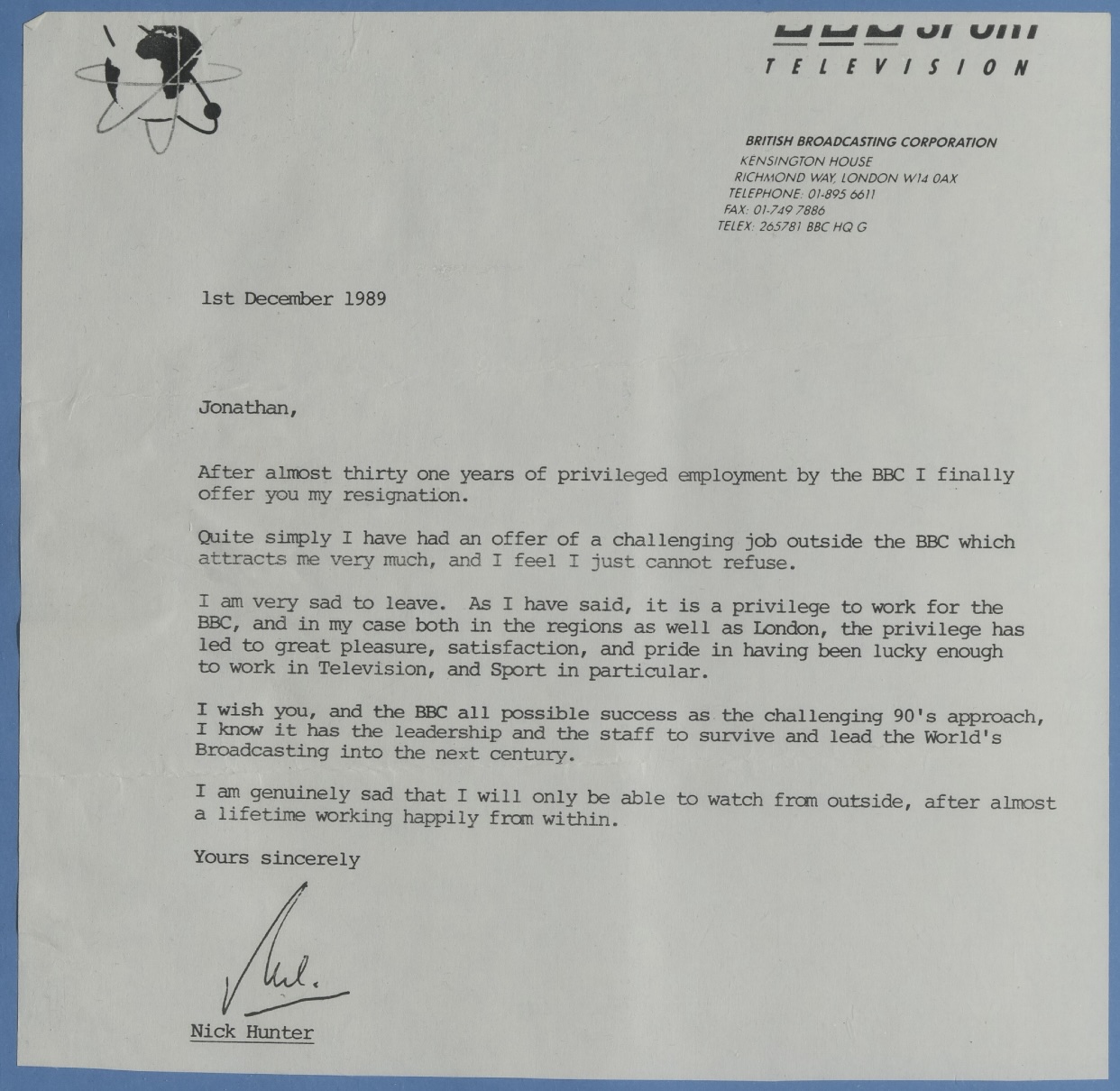
Nick went to see Paul Fox, one of the pioneers of televised sport in the 1950s and then Managing Director of BBC TV, and Jonathan Martin to inform them of his decision to leave the BBC. Fox offered him more money. Nick said it was not about the money, it was a “no job” situation. Fox gave him two hours to clear his desk and leave. As Nick left Fox’s office Jonathan Martin said to him, “The satellite sport business will never catch on..” The only good wishes Nick received came from the Director General, Michael Checkland. Compared to the well-wishers a few years earlier in Manchester, it was something of a sad exit from the BBC.
BSB and the Sports Channel (1989)
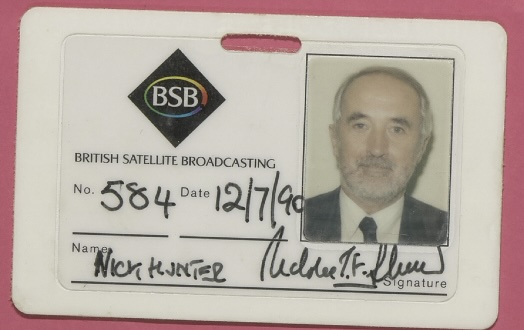
Nick started immediately with BSB on Monday 4th December 1989. “I felt most peculiar” he remarks in his scrapbooks, “Elated but at the same time, concerned as to whether I had done the right thing.”
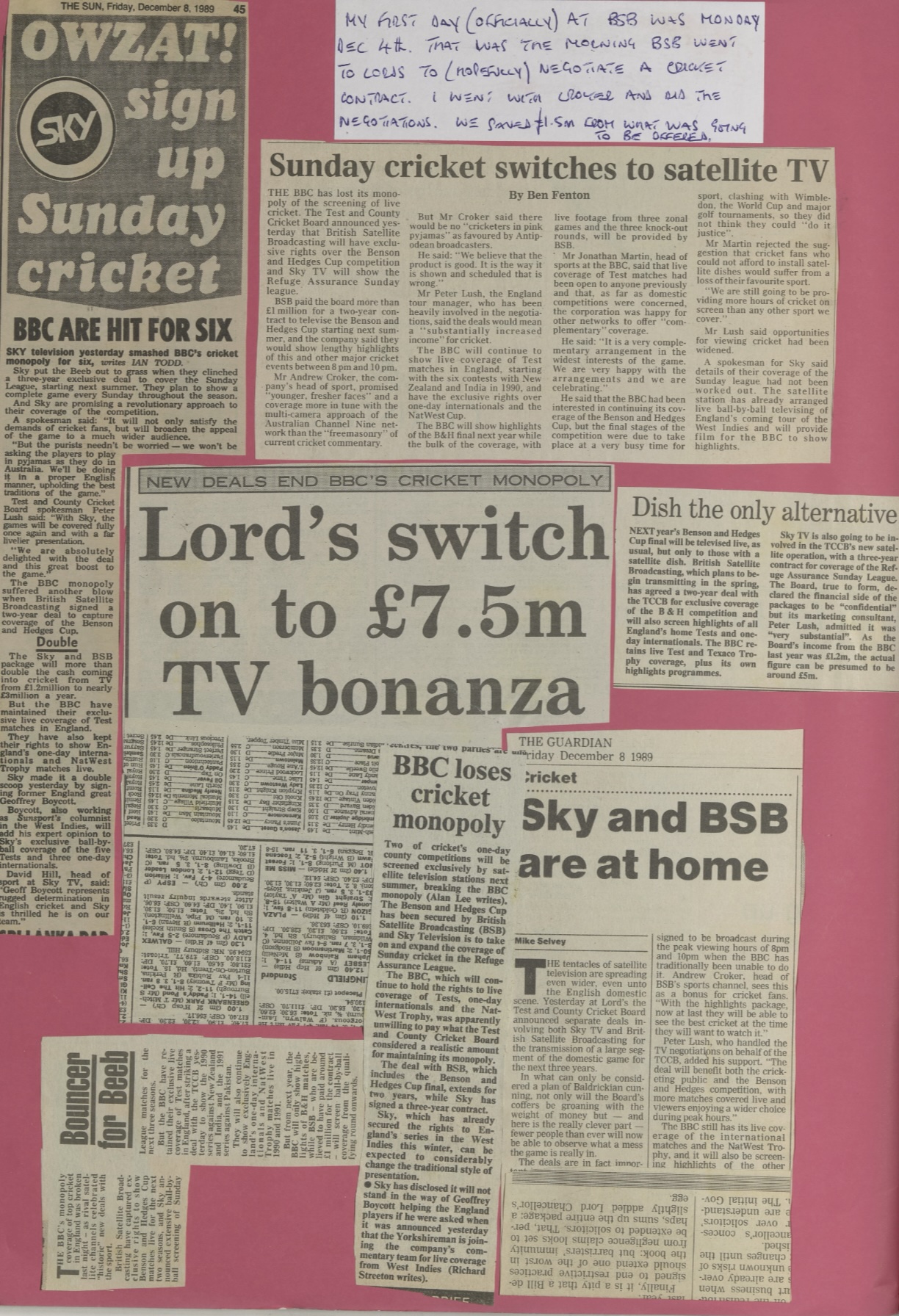
The Sports Channel was owned by global sports marketing agent and entrepreneur Mark McCormack’s IMG which had a deal worth £155m to supply the channel to BSB. Nick’s first day involved a visit to Lords with Andrew Croker, BSB’s head of sport, to negotiate coverage of cricket. The outcome was revelatory: BSB won the rights to cover the Benson and Hedges Cup and Sky TV won the rights to Sunday League cricket. It was the first time the BBC had lost its monopoly of cricket broadcasting.
The new channel launched on 27th March 1990 and showed live sport, but also introduced the UK’s first dedicated Sports News programming, with five sports desks a day, seven days a week. Alongside Nick, BSB had recruited some major talent from across British television including Vic Wakeling from ITV news and Tony Ball, also from ITV.
Nick again picks up the story in his scrapbooks:
The fact that we got on the air at all, never mind successfully was nothing short of a miracle. I signed up quite a number of people from the BBC – which totally infuriated those I had left behind. Most of them had already moved by the time I got there. All had to serve their 3 months after they resigned – so it made our timing absolutely vital. Would be commentators and link men were contracted all day and every day. We were covering, or dubbing, every conceivable sport – and the station needed style and a voice. Looking back I worked harder than ever before, with less support, and the achievement of getting on the air was very considerable. I still believe it was also a miracle!
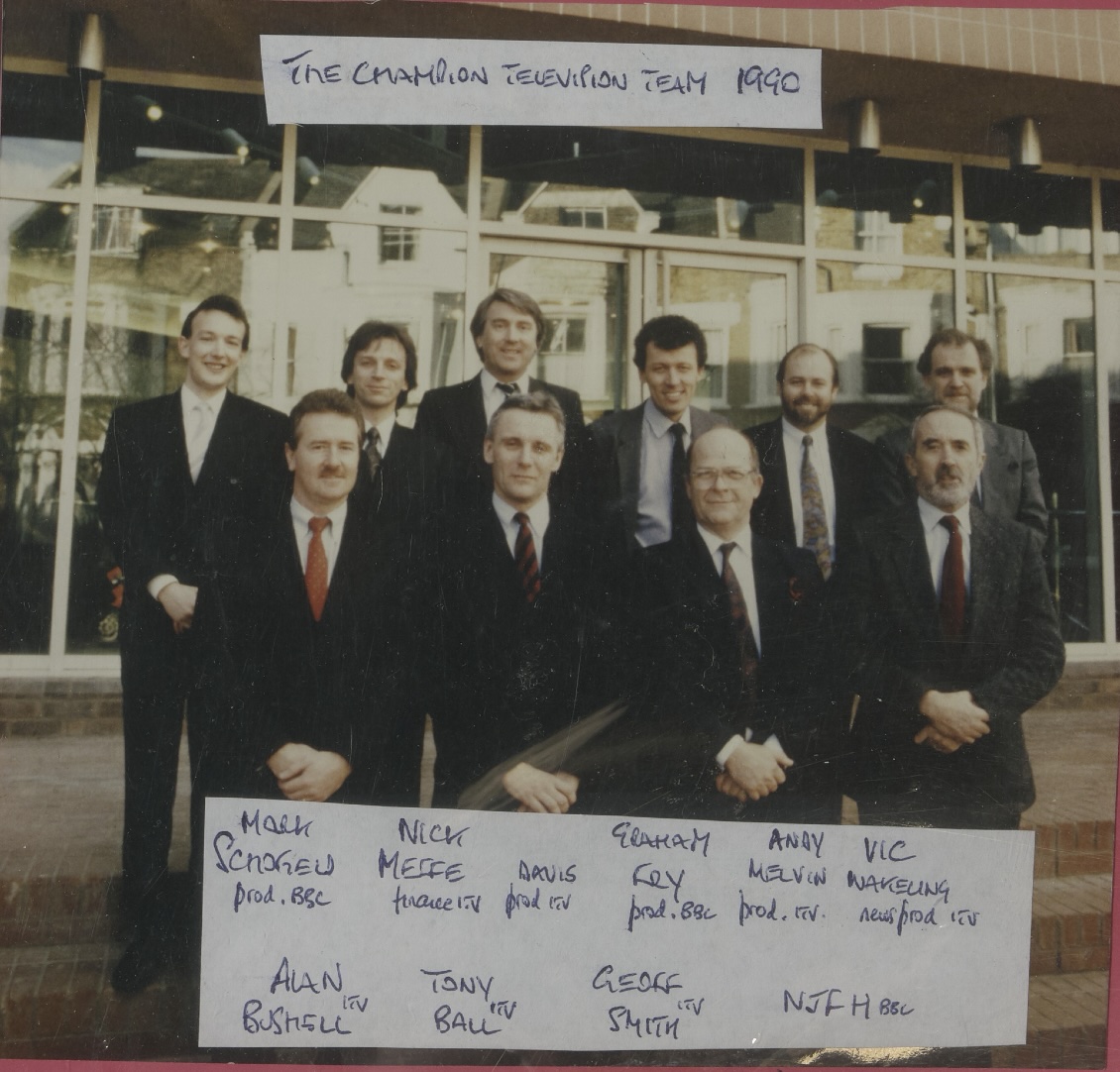
Unfortunately for Nick, new challenges emerged, with new politics between Champion and BSB, conflicting management style and incompetence, which amounted to frustration on Nick’s part that things were not working as they should be. In November 1990, only one year in, BSB and Sky TV merged to form BskyB, but Murdoch’s controlling share of the new company meant the writing was on the wall for anyone outside Sky’s operations. Champion, IMG’s company, lost the rights to supply sport and David Hill and Roger Moody came in to set up the new Sky Sports channel in its place. “I was tired, shattered, and disillusioned anyway”, remarked Nick, “There was absolutely no support whatsoever.”
Rupert Murdoch later remarked that sport, above all else, was the battering ram to a new era of television. Nick’s involvement in setting up the Sports Channel, which would eventually be the prototype for the Sky Sports channel (launched in 1991), was groundbreaking and controversial in equal measure. His work on the satellite sports channel is a largely lost history in the tale of how British television sport was transformed in the early 1990s. But hopefully, this story from Nick’s perspective, on the inside of this pioneering and tumultuous period, provides some insights in to how it began and its early stuttering steps into a new era of TV sport.
Professor Richard Haynes
April 2026
